To guarantee success with your nonstick cookware, you need the right utensils. Opt for silicone or nylon spatulas that protect the surface while cooking. Sturdy silicone tongs are essential for flipping, and wooden spoons are classic, safe choices. Always avoid metal utensils to prevent scratches. For serving, choose ladles and spoons made from non-damaging materials. By selecting the best utensils, you’ll enhance your cooking experience and prolong your cookware’s lifespan. Discover more tips on maximizing your nonstick cooking.
Are Nonstick Cookware Options Worth It?
Are nonstick cookware options really worth your investment? If you’re looking for convenience and ease in the kitchen, they often are. Nonstick surfaces reduce the need for excessive oil or butter, making healthier cooking simpler. You’ll find that food releases easily, which means less time scrubbing stubborn residues after meals.
Additionally, they heat evenly, helping you achieve that perfect sear or sauté. While some nonstick options can wear out over time, investing in high-quality brands often pays off with durability and performance. Just be mindful of using the right utensils to avoid scratches, as that’ll extend the life of your cookware. Ultimately, if you prioritize quick cleanup and efficient cooking, nonstick cookware is definitely worth considering.
Choose the Best Utensils for Nonstick Cooking
When it comes to cooking with nonstick cookware, what utensils should you choose to protect those delicate surfaces? You’ll want to avoid metal utensils, as they can scratch and damage the coating. Instead, opt for nylon, wood, or silicone utensils that are gentle yet effective. These materials won’t compromise the nonstick surface, ensuring your pans last longer and perform better. Look for sturdy spatulas and spoons that can handle high temperatures without melting. Additionally, consider purchasing a good quality whisk or tongs made from nonstick-friendly materials. By choosing the right utensils, you’ll enhance your cooking experience and keep your nonstick cookware in top shape for years to come. Happy cooking!
Safe and Versatile Silicone Utensils
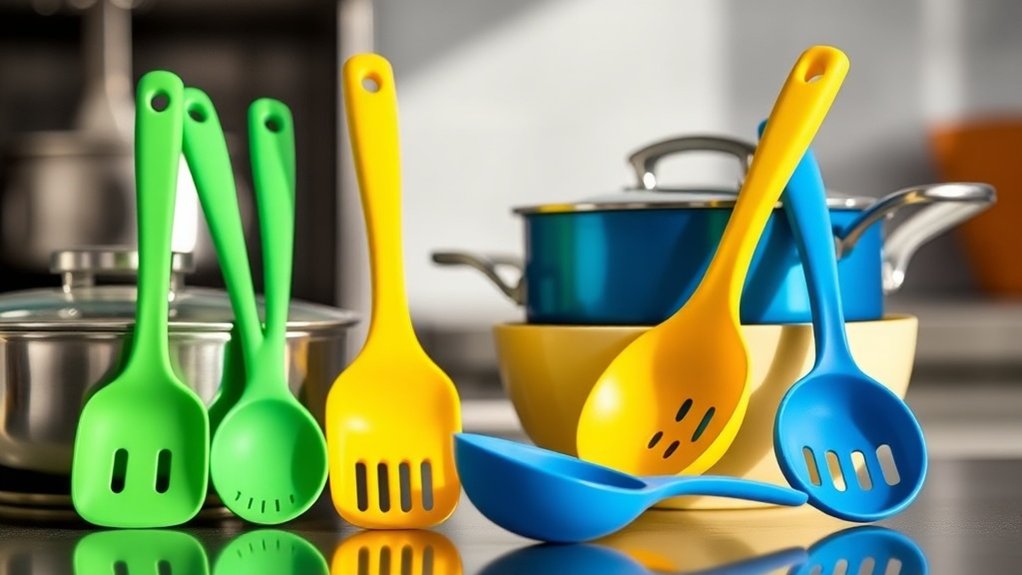
Silicone utensils have quickly become a favorite among home cooks for their safety and versatility. They’re heat-resistant, meaning you won’t have to worry about melting or warping when cooking at high temperatures. Plus, their nonstick surface glides easily over cookware, preventing scratches and damage to your pots and pans. You can use silicone spatulas and spoons for mixing, flipping, and scraping without fear of ruining your nonstick surfaces.
Cleaning is a breeze, too; most silicone utensils are dishwasher-safe, saving you time and effort. Whether you’re stirring a delicate sauce or serving a cake, silicone utensils adapt to your needs. With a variety of colors and styles available, they’ll not only enhance your cooking experience but also brighten up your kitchen.
Wooden Spoons: Timeless Tools for Nonstick Cooking
Wooden spoons have long been cherished in kitchens worldwide, and for good reason. Their sturdy construction makes them perfect for stirring and mixing without scratching your nonstick surfaces. You’ll appreciate how they won’t conduct heat, allowing you to handle them without burning your hands. Plus, wooden spoons resist staining and odors, making them easy to clean and maintain. When you’re cooking delicate sauces or sautéing vegetables, these spoons offer excellent control, ensuring even mixing without damaging your cookware. They’re also versatile; whether you’re baking, cooking, or serving, wooden spoons fit the bill. By incorporating a wooden spoon into your nonstick cooking routine, you’ll enhance both your culinary experience and the longevity of your favorite pots and pans.
How to Pick the Right Spatula for Nonstick Cooking
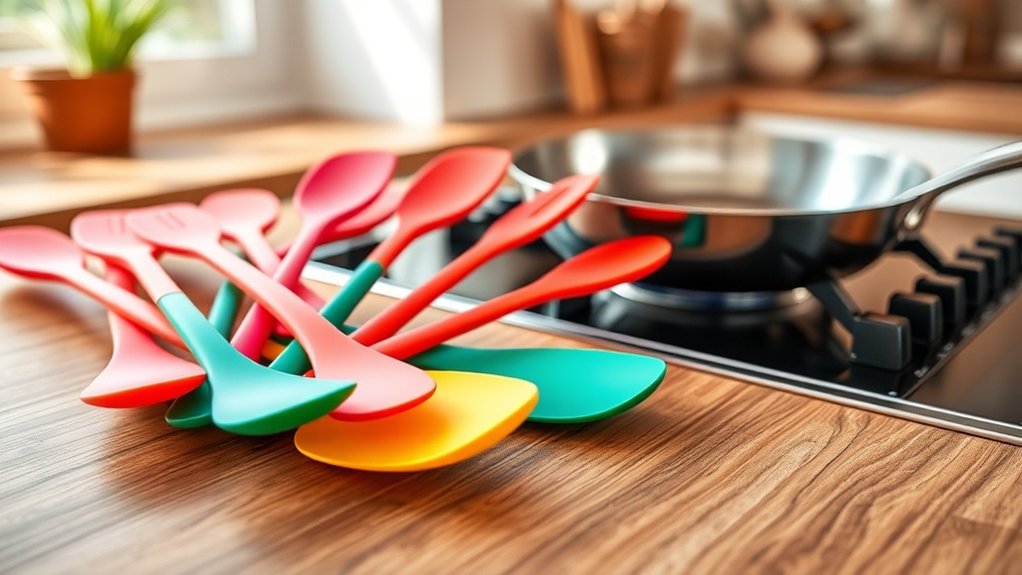
Choosing the right spatula for nonstick cooking can greatly impact your culinary experience, just like using a wooden spoon does. When selecting a spatula, consider these key factors:
- Material: Opt for silicone or nylon spatulas, as they’re gentle on nonstick surfaces, preventing scratches and damage.
- Size and Shape: Choose a spatula that fits comfortably in your hand and is appropriate for the size of your cookware. A larger spatula works well for flipping pancakes, while a smaller one is ideal for delicate tasks.
- Flexibility: Look for a spatula with a flexible blade. This feature allows you to easily slide under food and lift it without breaking apart.
With these tips, you’ll enhance your nonstick cooking experience effortlessly!
Essential Tongs for Flipping and Serving Nonstick Dishes
When it comes to flipping and serving nonstick dishes, having the right tongs can make all the difference. Look for tongs that are made from silicone or nylon, as they won’t scratch your cookware’s surface. A good grip is essential, so choose tongs with ergonomic handles that feel comfortable in your hands. Long tongs provide better control, especially when handling hot items. Opt for tongs with a locking mechanism for easy storage and safety. If you’re working with delicate foods, consider tongs with a tapered edge to slide under your dish smoothly. Remember, the right tongs not only enhance your cooking experience but also protect your nonstick surfaces, ensuring your cookware lasts longer and performs better.
How to Choose the Right Ladles and Serving Spoons for Nonstick Cookware
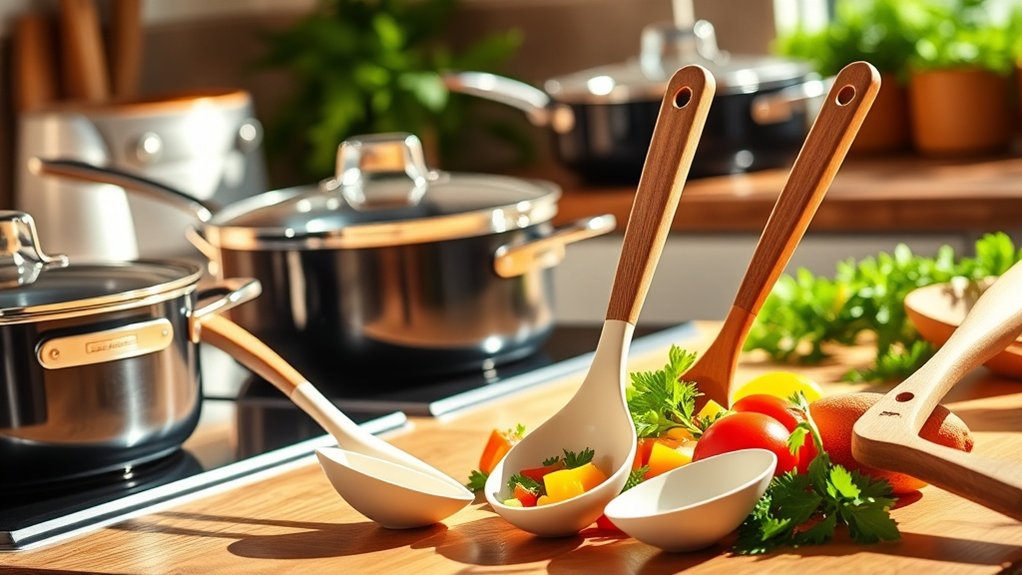
As you prepare to serve your favorite dishes, selecting the right ladles and serving spoons for nonstick cookware is essential to maintaining the integrity of your pans. Here are three key factors to take into account:
- Material: Opt for silicone or wooden utensils. They’re gentle on nonstick surfaces and won’t scratch them.
- Design: Choose ladles and spoons with wide, flat heads. This shape helps scoop out food easily without damaging the coating.
- Heat Resistance: Verify your utensils can withstand high temperatures, especially if you’re serving hot dishes. Look for options rated for at least 400°F.
Essential Tips for Cleaning Nonstick Utensils to Prevent Damage
Maintaining your nonstick utensils is just as important as selecting the right ones. To keep them in top shape, always wash your utensils by hand using warm, soapy water and a soft sponge. Avoid abrasive cleaners and scouring pads that can scratch the surface. If food sticks, soak the utensils for a few minutes before cleaning. Never place nonstick utensils in the dishwasher, as the harsh environment can cause damage. Additionally, let your utensils cool before washing to prevent warping. Store them carefully to avoid scratches—use a soft cloth or a dedicated drawer organizer. Following these simple tips will help you maintain your nonstick utensils and guarantee they last longer while performing their best.
Tips to Extend the Life of Your Nonstick Cookware
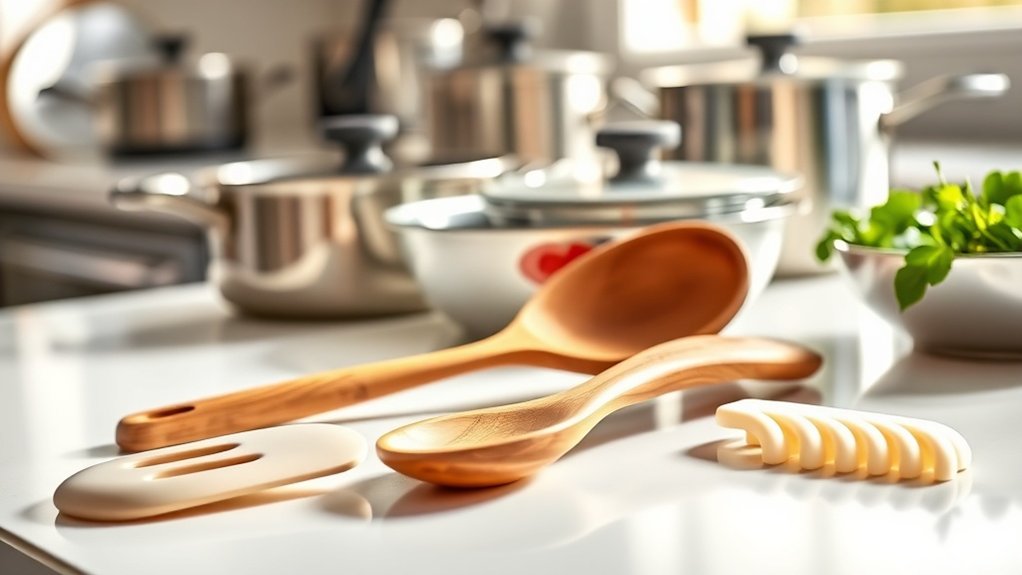
To guarantee your nonstick cookware lasts as long as possible, it’s important to adopt some simple yet effective habits. By following these tips, you can enjoy your nonstick pans for years to come:
- Use the Right Utensils: Stick to silicone, wood, or plastic utensils to prevent scratching the surface.
- Avoid High Heat: Cook on low to medium heat. High temperatures can degrade the nonstick coating over time.
- Hand Wash Only: Even if your cookware is labeled dishwasher safe, hand washing with mild soap and a soft sponge will help maintain its quality.
Frequently Asked Questions
Can I Use Metal Utensils on Nonstick Cookware?
No, you shouldn’t use metal utensils on nonstick cookware. They can scratch and damage the nonstick coating, leading to reduced effectiveness. Instead, opt for silicone, wood, or plastic utensils to guarantee your cookware lasts longer.
How Do I Know if My Utensils Are Nonstick-Safe?
Look for utensils labeled as nonstick-safe, often silicone, wooden, or plastic. If they remind you of a gentle breeze in a summer garden, you’ll know they won’t ruin your favorite cookware’s pristine surface.
What Is the Best Way to Store Nonstick Utensils?
To store nonstick utensils, keep them in a drawer or container lined with a soft cloth. Avoid stacking them directly on each other to prevent scratches, and always make certain they’re clean and dry before storing.
Are Dishwasher-Safe Utensils Safe for Nonstick Cookware?
About 70% of nonstick cookware damage comes from using metal utensils. Dishwasher-safe utensils can be safe for nonstick cookware, but always check materials; silicone or nylon options are best to avoid scratching your pans.
How Often Should I Replace My Nonstick Utensils?
You should replace your nonstick utensils every few years or sooner if you notice wear, scratches, or discoloration. Regularly check for any damage, as this can affect cooking performance and your cookware’s lifespan.
At a Glance
In the grand kitchen symphony, choosing the right utensils for your nonstick cookware is like selecting the perfect instruments for a melody. With silicone, wood, and the right spatula in hand, you can orchestrate delicious dishes without a hitch. Just remember, treating your nonstick treasures with care will guarantee they shine for years to come. So, embrace these tools, dance through your cooking adventures, and watch as your culinary creations take center stage!