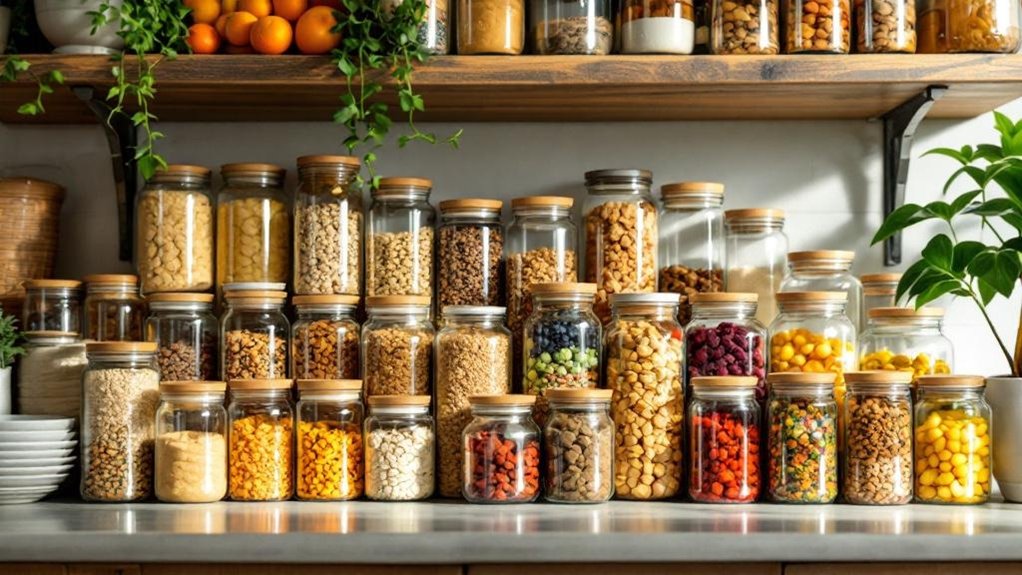
The best containers for pantry storage keep your food fresh and organized. Consider using glass jars for dry goods, as they’re non-reactive and easy to see through. Airtight plastic bins work well for snacks and are lightweight. For an eco-friendly option, try stainless steel or bamboo containers. Think about size, material, and sealing to maximize space and reduce waste. There’s more to discover about organizing your pantry effectively and maintaining these containers.
Why Choosing the Right Containers Matters for Pantry Storage

When it comes to pantry storage, choosing the right containers can make all the difference in keeping your food fresh and organized. The right containers not only preserve the quality of your ingredients but also maximize your available space. You’ll find that clear, stackable containers help you easily identify what’s inside, reducing the chances of buying duplicates. Airtight seals keep moisture and pests at bay, extending the shelf life of your dry goods. Plus, using uniform containers creates a visually pleasing and tidy pantry, making meal prep more enjoyable. Investing in quality containers saves you money in the long run by preventing food waste. Ultimately, the right containers simplify your cooking routine and enhance your kitchen experience.
How to Choose the Right Container for Dry Food Storage
How do you determine the best container for storing your dry foods? Start by considering a few key factors to keep your pantry organized and your food fresh.
- Material: Choose between plastic, glass, or metal based on your needs and preferences.
- Size: Make sure the container fits your available pantry space and holds the right amount of food.
- Seal: Look for airtight lids to prevent moisture and pests from ruining your food.
- Labeling: Opt for containers that are easy to label, so you always know what’s inside.
Key Benefits and Drawbacks of Glass Containers

While glass containers offer a sleek and stylish option for pantry storage, they come with both advantages and disadvantages that you should consider. One major benefit is their non-reactive nature, meaning they won’t leach chemicals into your food. They’re also easy to clean and often dishwasher-safe, making maintenance a breeze. Plus, you can see your contents at a glance, helping you stay organized.
However, glass containers can be heavy and prone to breaking if dropped. They’re not always the best choice for kids or on-the-go storage. Additionally, the initial cost can be higher than plastic alternatives. Weighing these pros and cons will help you decide if glass containers are the right fit for your pantry needs.
Understanding Plastic Containers: Pros and Cons
If glass containers aren’t the right match for your pantry, plastic containers might be just what you need. They offer a variety of benefits, but there are some downsides to take into account as well. Here’s a quick look at the pros and cons:
- Lightweight and portable: Easy to handle and store, making them great for moving.
- Durable: Less likely to break compared to glass, perfect for families with kids.
- Variety of sizes: Available in numerous shapes and sizes to fit your needs.
- Cost-effective: Typically more affordable than glass, helping you save money.
While they’re convenient, be mindful of potential issues like scratching and staining. Choose wisely to keep your pantry organized!
When to Use Metal Containers for Pantry Storage

When considering pantry storage options, metal containers can be a smart choice for certain items. They’re durable and provide excellent protection against pests, making them perfect for storing grains, flour, and sugar. If you’ve got dry goods that need a bit of extra security, metal containers can keep them fresh and safe. Additionally, their airtight seals help preserve the quality of your food, keeping moisture and odors at bay.
You’ll also appreciate their aesthetic appeal; metal containers often add a sleek, modern look to your pantry. However, avoid using them for items sensitive to light or heat, as metal can conduct temperature changes. Overall, metal containers are a reliable option for long-term pantry storage when used wisely.
Choosing Eco-Friendly Pantry Containers
As you seek to create a more sustainable pantry, choosing eco-friendly containers can greatly impact your environmental footprint. Opting for materials that are biodegradable, recycled, or reusable not only helps the planet but can also enhance your pantry’s aesthetic. Here are some great options to evaluate:
- Glass jars: Durable and recyclable, they’re perfect for storing dry goods.
- Bamboo containers: Biodegradable and stylish, they add a natural touch.
- Stainless steel bins: Long-lasting and recyclable, they keep your items secure.
- Recycled plastic containers: Lightweight and functional, they reduce waste while storing food.
The Importance of Airtight Sealing for Food Freshness

To keep your pantry items fresh and flavorful, airtight sealing is essential. When containers aren’t properly sealed, air, moisture, and pests can easily invade, compromising the quality of your food. This can lead to stale snacks, spoiled grains, or clumpy spices, making your meals less enjoyable. By choosing airtight containers, you create a barrier that protects your ingredients from these threats. You’ll notice the difference in taste and texture, ensuring your pantry staples remain vibrant and delicious for longer. Plus, airtight containers help maintain ideal humidity levels, preventing mold growth and preserving crunchiness in snacks. Investing in good quality airtight storage is a simple yet effective way to enhance your cooking experience and reduce food waste.
How to Organize Your Pantry With Containers
A well-organized pantry not only enhances the aesthetic of your kitchen but also makes meal prep more efficient. Start by grouping similar items together, using clear containers to keep everything visible. Label each container to save time when you’re cooking. Here are a few tips to get you started:
- Use stackable bins for snacks and dry goods.
- Store spices in a dedicated container or drawer for easy access.
- Incorporate baskets for larger items like potatoes or onions.
- Reserve the top shelves for less frequently used items.
Tips for Maintaining Your Pantry Storage Containers

While keeping your pantry storage containers organized might seem like a simple task, regular maintenance is essential for ensuring they remain functional and appealing. Start by routinely cleaning your containers to prevent buildup of food residue. Use warm, soapy water or a vinegar solution for a thorough cleanse, and dry them completely before refilling. Check expiration dates on contents regularly, and rotate items to keep the freshest products up front. Label your containers clearly to identify contents at a glance, and consider using clear containers to easily monitor stock levels. Finally, assess your storage needs periodically; adjust your container sizes or types as necessary to optimize space and accessibility in your pantry.
Frequently Asked Questions
What Sizes of Containers Are Best for Pantry Organization?
For pantry organization, it’s best to use a variety of container sizes. Small containers work for spices, medium ones suit grains, and larger bins are ideal for snacks or bulk items. Choose what fits your needs!
Can I Mix Container Materials in My Pantry?
Yes, you can mix container materials in your pantry. Just make sure they’re food-safe and stackable if possible. Combining glass, plastic, and metal can create an appealing aesthetic while keeping your items organized and accessible.
How Do I Clean and Maintain My Containers?
Cleaning and maintaining your containers is as easy as pie! Just wash them with warm, soapy water, rinse well, and dry thoroughly. Regularly check for any spills or stains to keep them sparkling clean!
Are There Specific Containers for Spices and Herbs?
Yes, there are specific containers for spices and herbs. Opt for airtight glass jars or labeled plastic containers to keep them fresh. Make sure they’re opaque to protect from light, which can degrade flavor.
What Labels Work Best for Pantry Storage Containers?
For pantry storage containers, use waterproof label stickers or chalkboard labels. They resist moisture and allow easy re-labeling. Make sure the labels are clear and easy to read, so you can quickly identify contents.
At a Glance
Choosing the best containers for pantry storage can transform your kitchen experience. By selecting the right materials, ensuring airtight seals, and organizing effectively, you not only preserve food freshness but also create a visually appealing space. Whether you prefer glass, plastic, or metal, each option offers unique benefits. Embrace eco-friendly choices and prioritize functionality. With thoughtful selection and maintenance, you’ll enjoy a well-organized pantry that’s both practical and inviting, making cooking and meal prep a breeze.