When it comes to meat preparation, having quality knives is essential. They not only enhance your cooking experience but also guarantee clean, precise cuts. A chef’s knife offers versatility, while a boning knife allows for effortless deboning. Using a cleaver can make chopping tougher meats easy. Plus, proper maintenance keeps your knives performing well for years. Investing in the right tools will truly elevate your culinary skills, and there’s more to discover about each knife’s unique benefits.
Why Quality Knives Matter for Preparing Meat
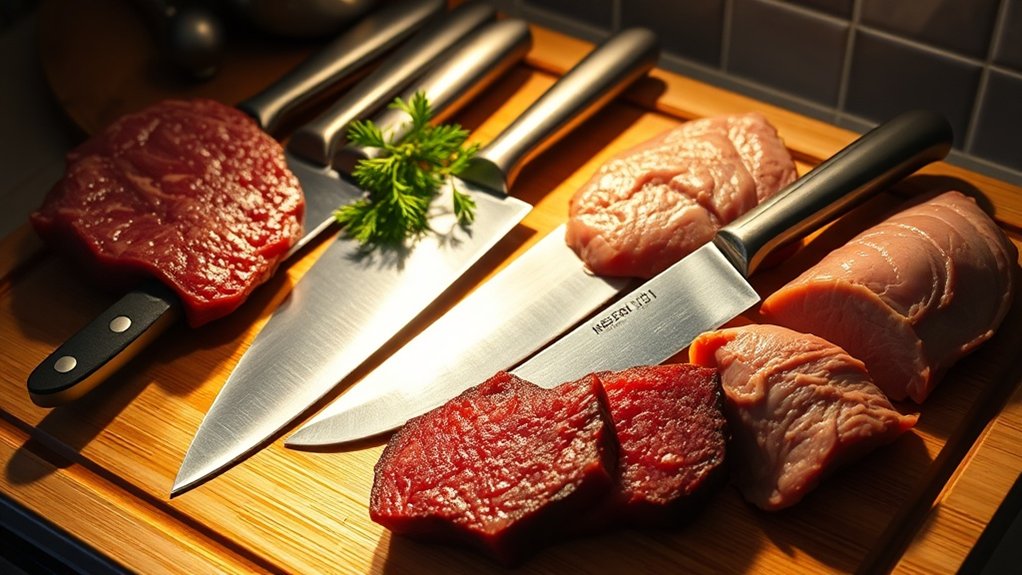
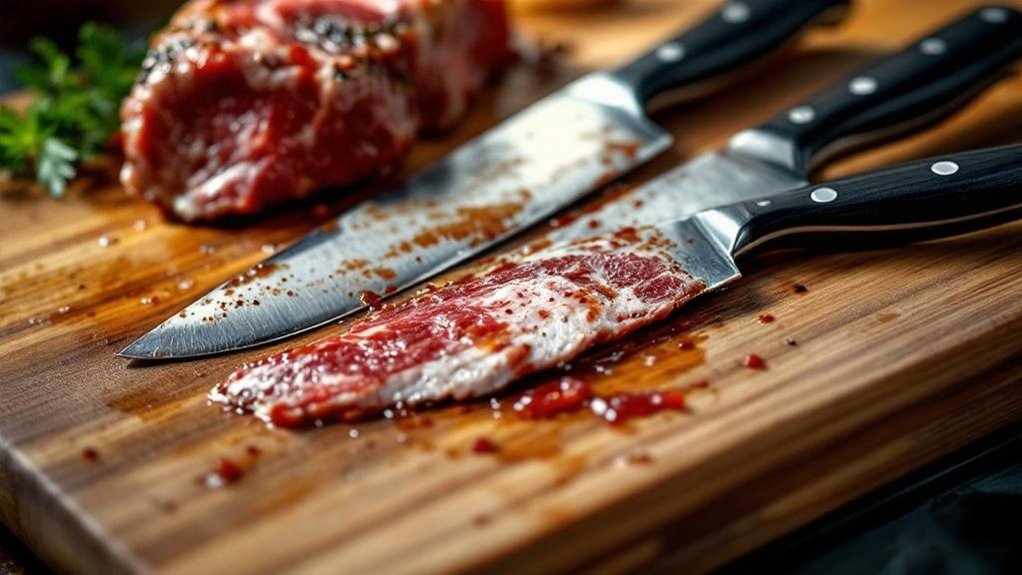
When you’re preparing meat, having quality knives can make all the difference in your cooking experience. Sharp, well-balanced knives allow you to cut through meat effortlessly, ensuring clean slices that enhance presentation and tenderness. A good knife reduces the risk of accidents, too; you’ll find it easier to control your cuts, minimizing slips and injuries. Plus, using the right knife can help maintain the meat’s juices, preserving flavor and moisture during cooking. Investing in quality knives means you’ll spend less time struggling and more time enjoying the process. You’ll notice that your prep work becomes more efficient, which translates to better-tasting meals. Ultimately, having the right tools elevates your culinary skills and makes meat preparation a more enjoyable task.
Essential Types of Knives for Cutting Meat
To achieve the best results in meat preparation, it’s crucial to have a selection of essential knives at your disposal. Each type of knife serves a unique purpose, ensuring you can tackle any meat-cutting task with ease. Here are four must-have knives for your kitchen:
- Chef’s Knife: Versatile for slicing and dicing various cuts.
- Boning Knife: Perfect for removing bones from meats and fish.
- Carving Knife: Ideal for slicing cooked meats thinly and evenly.
- Cleaver: Great for chopping through bones and tougher cuts.
Investing in these knives will not only enhance your efficiency but also improve the quality of your meat dishes. With the right tools in hand, you’ll find meat preparation a more enjoyable and rewarding experience.
How Does a Chef’s Knife Enhance Your Meat Cutting Skills?

A chef’s knife greatly enhances your meat cutting skills by providing versatility and precision. With its sharp, broad blade, you can effortlessly slice through different types of meat, whether it’s tender cuts or tougher ones. The weight and balance of the knife give you better control, allowing you to make clean, even cuts that improve presentation and cooking consistency. You can easily chop, dice, and mince herbs or vegetables to complement your meat dishes. This knife also allows you to tackle various techniques, from julienne to chiffonade, without switching tools. By mastering the chef’s knife, you’ll not only speed up your preparation time but also elevate the quality of your meals, making cooking more enjoyable and rewarding.
Understanding the Role of a Boning Knife in Meat Preparation
The boning knife is an essential tool for anyone serious about meat preparation. This knife is designed specifically to remove bones from meat, making your culinary tasks much easier. With its narrow, flexible blade, you can navigate around bones and joints with precision. Here’s why you need a boning knife in your kitchen:
- Precision: The sharp, pointed blade allows for accurate cuts.
- Flexibility: Its bendable design helps you work around bones effortlessly.
- Versatility: Perfect for various meats, including poultry, fish, and beef.
- Efficiency: Speeds up the deboning process, saving you time and effort.
Investing in a quality boning knife will elevate your meat preparation skills and enhance your cooking experience.
The Benefits of Using a Cleaver for Butchering

While many might think of a cleaver as just a heavy knife, it’s actually an indispensable tool for butchering that can transform your meat preparation. Its weight and wide blade make it perfect for cutting through bone and tough connective tissue, allowing you to break down large cuts of meat with ease. You can tackle everything from ribs to whole chickens in no time. Plus, the cleaver’s design gives you more control, reducing the risk of slips or accidental cuts. The hefty blade also aids in chopping through fat, ensuring you get the most out of your meat. Ultimately, using a cleaver not only streamlines your butchering process but also enhances the quality of your meat preparation.
How to Maintain Your Meat Preparation Knives
To keep your meat preparation knives in top condition, regular maintenance is vital. By taking the time to care for your knives, you’ll guarantee they perform their best and last longer. Here are some key maintenance tips to follow:
- Clean after each use: Wash your knives with warm, soapy water and dry them immediately to prevent rust.
- Sharpen regularly: Use a honing steel or whetstone to keep the blades sharp, guaranteeing clean cuts.
- Store properly: Use a knife block, magnetic strip, or sheath to protect the edges and prevent accidents.
- Inspect for damage: Regularly check for nicks or bends in the blade and address any issues promptly.
With these steps, you’ll maintain your knives’ performance and safety.
Choosing the Right Knife Set for Your Cooking Needs
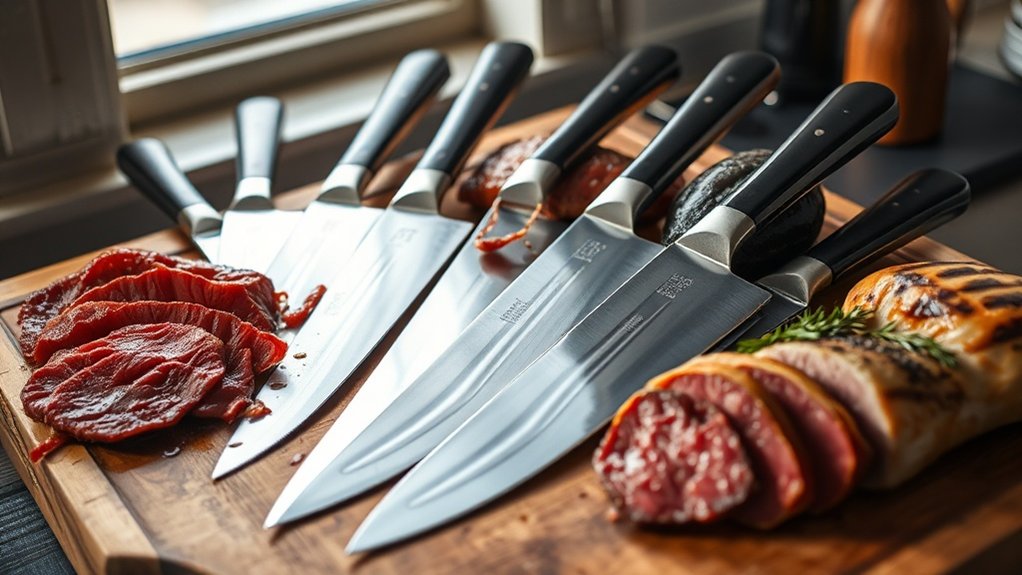
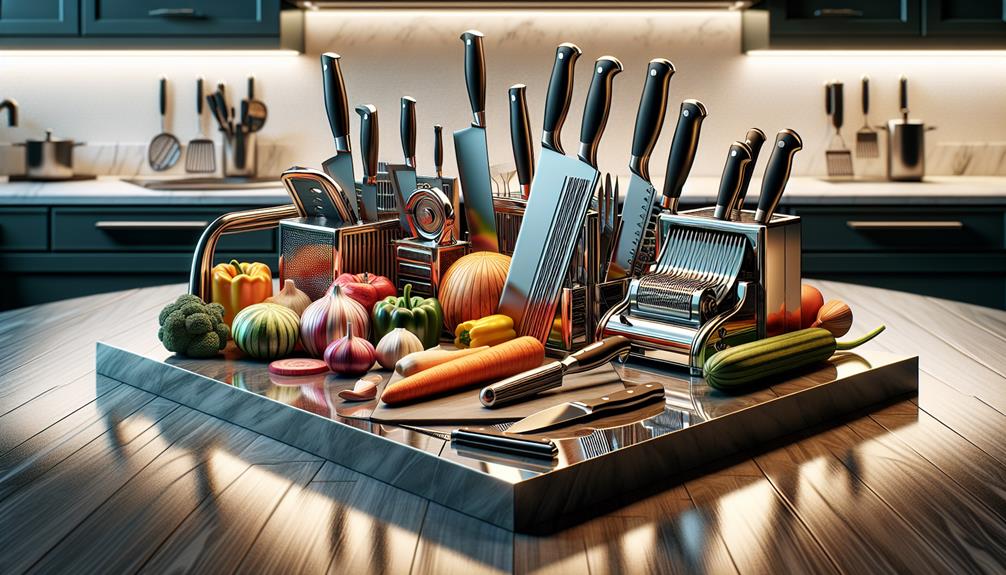
Selecting the right knife set for your cooking needs can greatly enhance your culinary experience, guaranteeing you have the right tools at your fingertips. Start by considering the types of meat you frequently prepare. A good set typically includes a chef’s knife, a boning knife, and a paring knife. Think about the handle material, too—wood offers a classic feel, while plastic is easier to maintain.
Don’t overlook the importance of balance and weight; a knife should feel comfortable in your hand. If you’re just starting out, a smaller set might suffice, but if you’re an avid cook, investing in a thorough set will pay off. Always prioritize quality over quantity to guarantee lasting performance in your kitchen.
Frequently Asked Questions
How Do I Know When to Replace My Meat Preparation Knives?
You’ll know it’s time to replace your meat preparation knives when they feel dull, chip easily, or show significant wear. Regularly inspect their performance; if they’re not cutting smoothly, it’s time for a new set.
Can I Use a Single Knife for All Meat Preparation Tasks?
Using a single knife for all meat preparation tasks is like trying to paint a masterpiece with just one brush. It’s possible, but you’ll miss precision and efficiency. Different tasks need specialized blades for best results.
What Are the Signs of a Dull Knife in Meat Preparation?
You’ll notice a dull knife when it struggles to slice through meat, requires excessive pressure, or leaves ragged edges. If you’re constantly using force, it’s time to sharpen or replace your knife.
How Much Should I Invest in Quality Meat Preparation Knives?
You should invest at least $100 to $300 in quality meat preparation knives. This range guarantees durability and performance, making your meat preparation easier and more enjoyable, ultimately enhancing your cooking experience considerably.
Are There Specific Brands Known for Excellent Meat Preparation Knives?
Yes, brands like Wüsthof, Victorinox, and Shun are known for their excellent meat preparation knives. You’ll find their quality builds enhance your experience and efficiency in the kitchen, making your preparation tasks much easier.
At a Glance
In the culinary world, the right knives are your Excalibur, empowering you to conquer the art of meat preparation with precision and ease. Quality blades not only elevate your skills but also transform your cooking experience. By investing in essential knives like a chef’s knife, boning knife, and cleaver, you’ll wield the tools of the trade like a master chef. So, sharpen your skills and enhance your kitchen prowess—your culinary journey is just a slice away!