
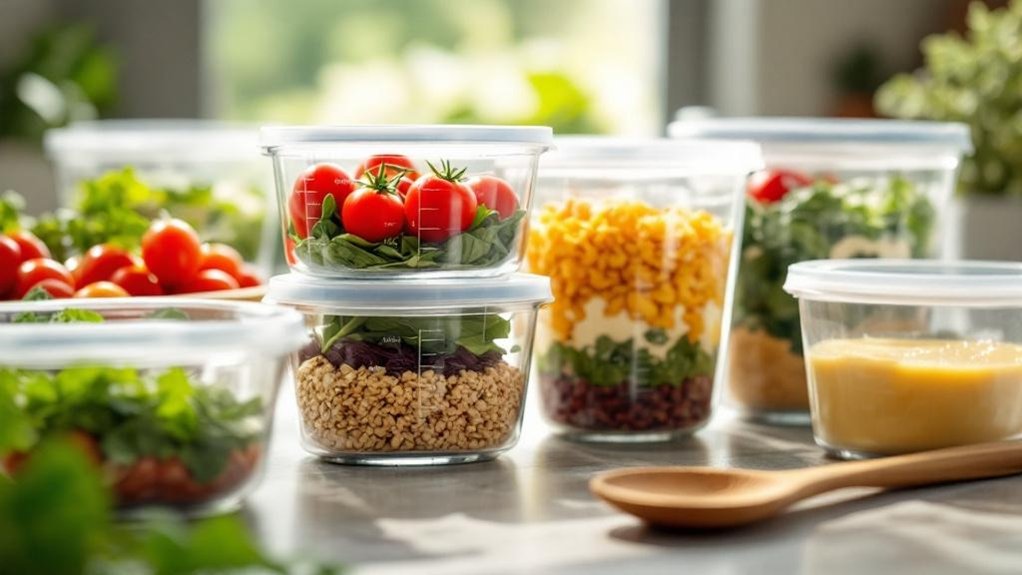
To make the most of measuring mark food containers, first, choose clear, durable containers with tight seals. Always guarantee they’re clean and dry before use, and pour slowly to avoid overfilling. When measuring, position your eyes level with the markings for accuracy, and spoon in dry ingredients gently. After use, seal them tightly and store in a cool place. Want to discover more tips about their care and creative uses? Keep going!
How to Choose the Right Measuring Mark Food Containers?
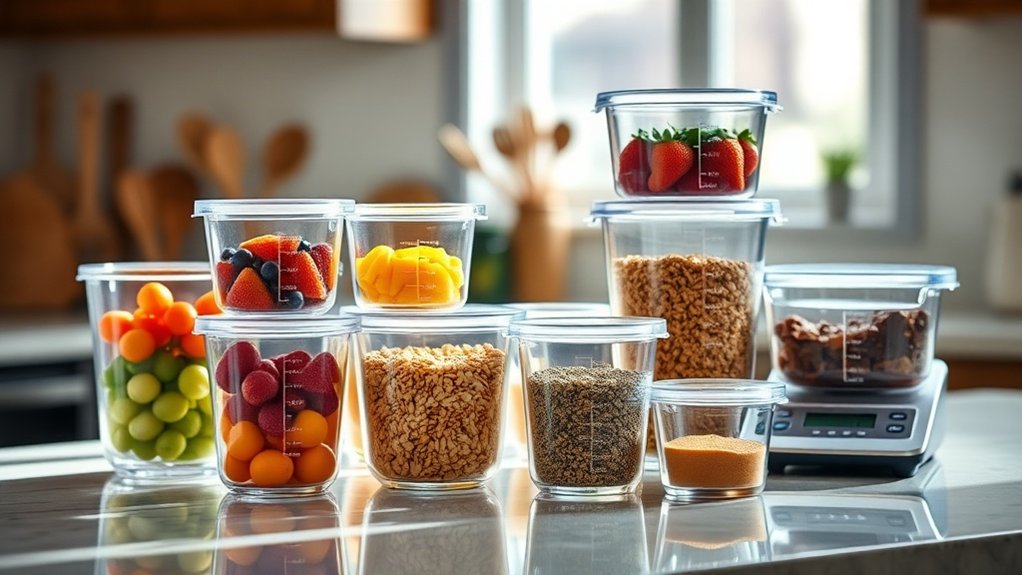
How can you guarantee you’re picking the right measuring mark food containers for your kitchen? Start by evaluating your needs. Think about the types of ingredients you’ll store and how much space you have. Look for containers that clearly display measurement markings, ensuring you can easily measure out portions. Opt for materials that are durable and safe for food use, like BPA-free plastic or glass. Check the container’s lid; it should create a tight seal to keep contents fresh. Consider stackable options to save space. Finally, read reviews to see how others have found the containers in real-life usage. By focusing on these factors, you’ll choose containers that meet your cooking and storage needs effectively.
Best Practices for Using Measuring Mark Food Containers
Once you’ve selected the right measuring mark food containers, using them correctly can enhance your cooking and storage experience. First, always make sure the container is clean and dry before adding ingredients. When filling the container, pour slowly to prevent overfilling, and use the markings to measure accurately. If you’re measuring liquids, check the level at eye height for precision. For dry ingredients, spoon them in gently, then level off with a straight edge. Seal containers tightly after use to maintain freshness. Store them in a cool, dry place to prevent warping. Finally, label your containers if you’re storing multiple items, so you can easily identify what’s inside without opening them. Happy cooking!
How to Clean and Maintain Your Measuring Mark Containers?
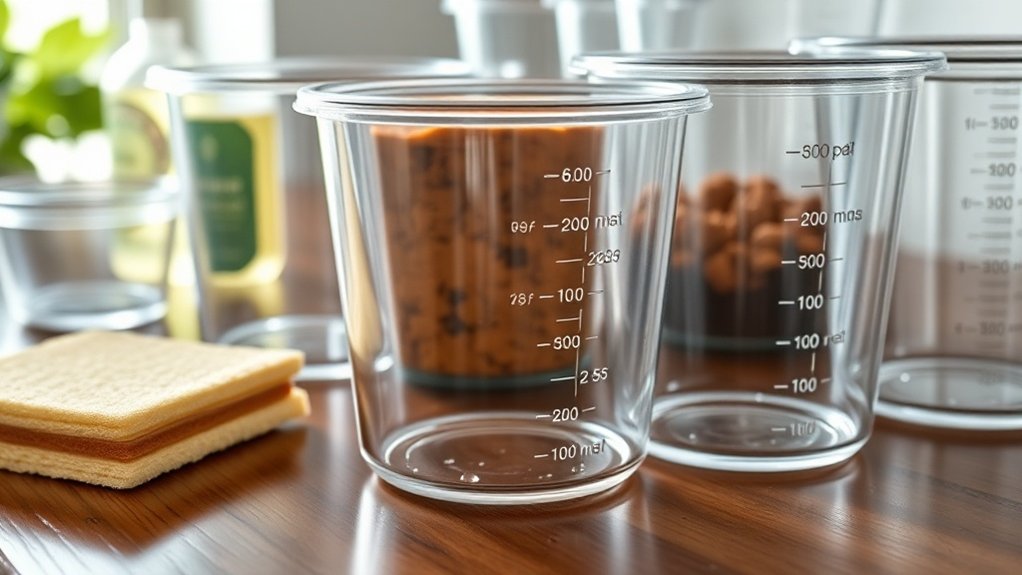
To keep your measuring mark food containers in top shape, regular cleaning and maintenance are essential. Start by washing them with warm, soapy water after each use. Avoid abrasive scrubbers that can scratch the surface. If you notice stubborn stains, a mixture of baking soda and water can work wonders. Rinse thoroughly to remove any soap residue.
For long-term maintenance, store your containers in a cool, dry place to prevent warping. Check the measuring marks regularly for fading; if they start to disappear, consider replacing the container. Avoid exposing them to extreme temperatures, as this can damage their integrity. By following these simple steps, you’ll guarantee your measuring mark containers remain reliable and accurate for all your cooking needs.
Creative Uses for Measuring Mark Containers
While most people think of measuring mark containers solely for cooking, they can serve a variety of creative purposes in your home. You can use them to organize craft supplies like beads, buttons, or small tools. They’re perfect for storing screws and nails in your garage, keeping everything neat and accessible. If you enjoy gardening, use them to measure out plant food or water for your potted plants. You can even transform them into mini flower vases for a quirky touch to your decor. Need a quick way to portion out snacks? Fill them with nuts or trail mix for easy grab-and-go treats. The possibilities are endless, so let your imagination run wild!
Common Mistakes to Avoid With Measuring Mark Food Containers
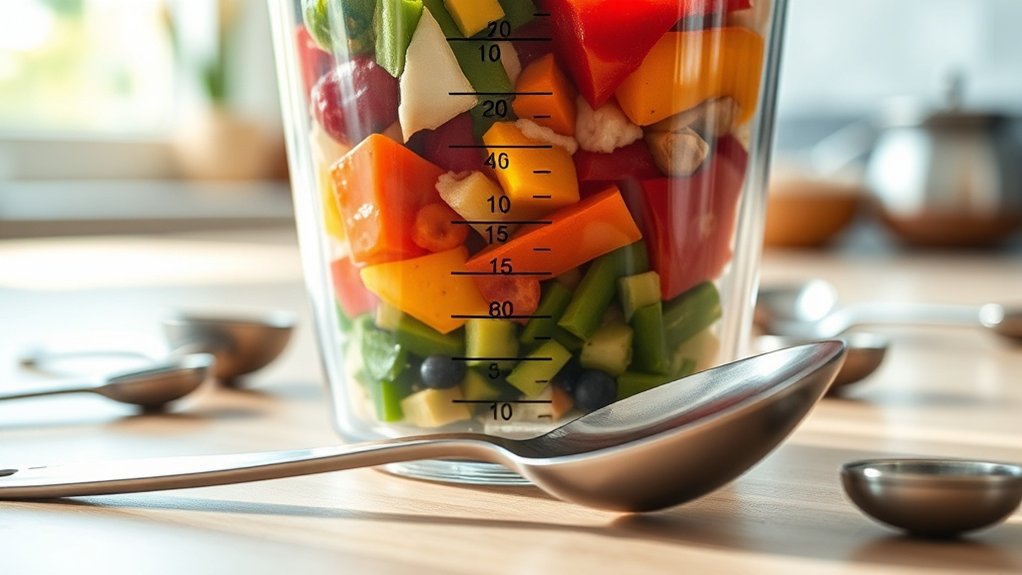
Even if you think you’re using your measuring mark containers correctly, there are common mistakes that can undermine their effectiveness. One mistake is not aligning your eyes with the measurement line. If you look at it from an angle, you might misjudge the amount. Also, avoid using the containers for liquids and solids interchangeably; different measuring systems apply. Forgetting to account for the weight of the container itself can lead to inaccurate measurements, too. Always wash your containers properly; residue can affect future measurements. Finally, don’t ignore the importance of calibrating your containers periodically. Regular checks guarantee that your measurements remain precise. By avoiding these mistakes, you’ll maximize the utility of your measuring mark food containers.
Frequently Asked Questions
Are Measuring Mark Food Containers Microwave Safe?
Yes, most measuring mark food containers are microwave safe, but you should check the manufacturer’s guidelines. Always verify they’re BPA-free and avoid using them if they show any signs of damage or wear.
Can I Use Measuring Mark Containers for Non-Food Items?
Sure, you can use measuring mark containers for non-food items. Imagine storing small screws or nails; the clear markings still help you gauge quantities easily, making organization efficient and straightforward for your DIY projects.
What Materials Are Measuring Mark Food Containers Made From?
Measuring mark food containers are typically made from durable plastics like polypropylene or polyethylene, which are food-safe. Some may also use glass or stainless steel, providing options for various storage needs while ensuring safety and durability.
How Do I Know if My Container Is Bpa-Free?
To know if your container’s BPA-free, check the label or packaging for specific statements. Look for recycling codes; if it’s made from polyethylene or polypropylene, it’s usually safe. When in doubt, contact the manufacturer.
Are There Standard Sizes for Measuring Marks on Containers?
When you pour your favorite recipe, you’ll find measuring marks often vary across brands. While some containers use standard sizes like cups and ounces, others might surprise you with unique increments. Always check for consistency!
At a Glance
Incorporating measuring mark food containers into your kitchen routine can make a world of difference. Did you know that using proper measurements can help reduce food waste by up to 25%? By following the tips outlined here, you’ll not only make cooking easier but also contribute to more sustainable meal prep. So, embrace these containers and elevate your culinary experience while doing your part for the planet. Happy cooking!


