
The best food storage solutions include quality airtight containers to keep your groceries fresh and safe. Use glass containers for both storage and reheating, and label them with dates for easy tracking. Don’t forget to group similar items together in your kitchen for quick access, and employ eco-friendly options like beeswax wraps and silicone bags. These methods will minimize waste and guarantee maximum flavor. Want to discover even more efficient storage tips? Keep exploring!
The Benefits of Proper Food Storage Solutions
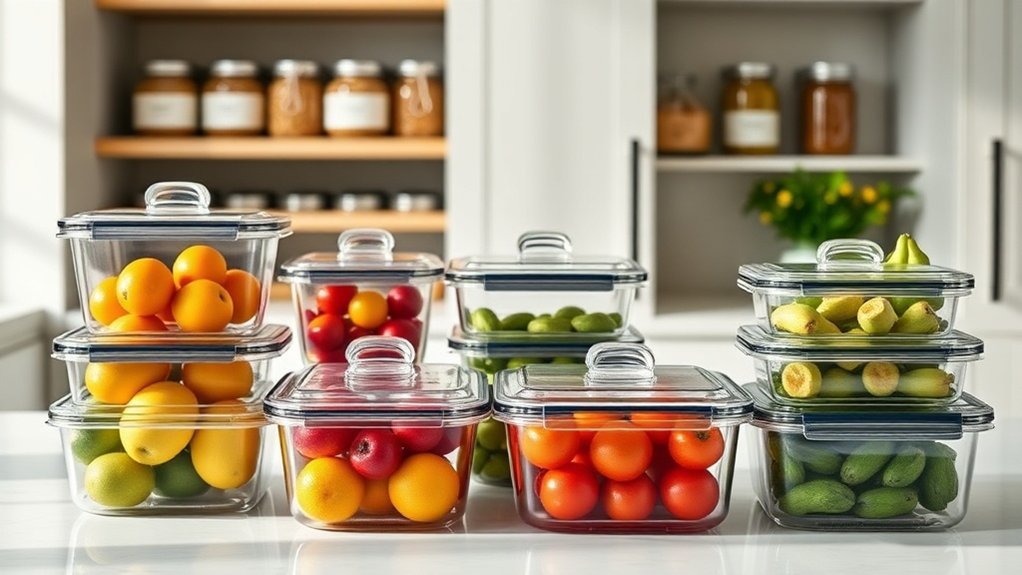
When you implement proper food storage solutions, you not only extend the shelf life of your groceries but also guarantee that your meals remain fresh and safe to eat. This means fewer trips to the grocery store, saving you time and money. By using airtight containers and proper wrapping techniques, you minimize spoilage and prevent cross-contamination. You’ll also reduce food waste markedly, which is good for both your wallet and the environment. Plus, well-stored food retains its nutritional value, ensuring you get the most out of every meal. Additionally, organized storage can make meal prep more efficient, allowing you to quickly find what you need. Embracing these solutions enhances your cooking experience and promotes healthier eating habits.
How to Organize Your Kitchen for Maximum Efficiency
To maximize efficiency in your kitchen, start by decluttering and creating designated zones for different tasks. Group similar items together: keep pots and pans near the stove, utensils in a drawer close by, and cutting boards near the prep area. This way, you won’t waste time searching for what you need. Use vertical space by adding shelves or hooks, allowing easy access to frequently used items. Invest in drawer organizers for utensils and small tools to keep everything tidy and accessible. Label containers to quickly identify contents and minimize confusion. Finally, regularly reassess your layout and adjust as needed to guarantee your kitchen stays functional and efficient, making cooking and food prep a breeze.
Essential Containers and Practices for Food Storage

With your kitchen organized for maximum efficiency, it’s time to focus on how you store your food. Start by investing in quality airtight containers. Glass containers are great for both storage and reheating, while plastic options are lightweight and durable. Label everything with dates to keep track of freshness. Don’t forget about vacuum-sealed bags; they’re fantastic for preserving leftovers or bulk purchases. When stacking containers, make certain they’re all uniform in size to save space. Remember to avoid overfilling, as air circulation is key for longevity. Finally, keep a dedicated space for frequently used items, making access easy. By following these practices, you’ll enhance your food storage game and minimize waste.
Essential Storage Tips for Fruits, Vegetables, and Proteins
While you might think all fruits and vegetables belong in the fridge, knowing the right storage methods can extend their freshness considerably. Here are some essential tips to keep your produce and proteins in top shape:
- Store apples and bananas separately to avoid premature ripening.
- Keep leafy greens wrapped in a damp paper towel for moisture retention.
- Store tomatoes at room temperature to maintain their flavor.
- Refrigerate proteins like meat and fish in airtight containers to prevent spoilage.
- Use breathability for root vegetables; a mesh bag works best.
Eco-Friendly Ways to Store Your Food

As you seek to reduce your environmental impact, consider adopting eco-friendly food storage solutions that are both sustainable and effective. Start by using glass containers or stainless steel instead of plastic, as they’re reusable and recyclable. Beeswax wraps offer a fantastic alternative to plastic wrap; they keep your food fresh while being compostable. Invest in silicone bags for snacks and leftovers, which can be washed and reused. If you prefer a classic method, mason jars are perfect for storing grains, nuts, and dried fruits. You can also opt for cloth produce bags to replace single-use plastic bags when you shop. These choices not only help minimize waste but also contribute to a healthier planet, making your food storage both practical and responsible.
Food Storage Tips to Keep Food Fresh and Reduce Waste
Choosing eco-friendly storage solutions is a great start, but knowing how to keep your food fresh and minimize waste is equally important. Here are some simple tips to help you achieve that:
- Store fruits and veggies separately to prevent spoilage.
- Use airtight containers to keep dry goods fresh longer.
- Label your leftovers with dates to track freshness.
- Keep your fridge at the right temperature (below 40°F) to extend shelf life.
- Freeze items you won’t use right away to prevent waste.
Frequently Asked Questions
What Are the Signs of Spoiled Food in Storage?
You’ll notice signs of spoiled food by checking for off smells, unusual textures, discoloration, and mold. If it’s sticky or slimy, it’s best to toss it to avoid potential illness. Stay safe!
How Long Can Leftovers Be Safely Stored?
You can safely store leftovers in the refrigerator for three to four days. If you freeze them, they’ll last about three to six months. Always check for signs of spoilage before consuming them.
Can I Reuse Food Storage Containers?
Absolutely, you can give your food storage containers a second life! Just make certain they’re clean and free from any lingering odors or stains. It’s a great way to reduce waste and save money.
What Temperature Should My Fridge Be for Food Safety?
Your fridge should be set at 32°F to 40°F (0°C to 4°C) for ideal food safety. Keeping it within this range helps prevent bacterial growth and guarantees your food stays fresh longer.
How Do I Prevent Freezer Burn on Stored Food?
To prevent freezer burn, wrap food tightly in plastic wrap or aluminum foil, use airtight containers, and keep your freezer at 0°F (-18°C) or lower. Also, avoid overloading your freezer to maintain proper air circulation.
At a Glance
Now that you know the best food storage solutions, imagine the difference it can make in your kitchen. Picture opening your fridge to fresh, neatly organized ingredients, ready for delicious meals. But wait—what if you’re still stuck in old habits? Don’t let that happen! Embrace these tips and tricks to keep your food fresh, minimize waste, and elevate your cooking game. The secret to a thriving kitchen is just a few smart choices away. Are you ready to transform your space?