To keep your food fresh while camping or traveling, start by choosing lightweight, airtight containers that can stack easily. Utilize pre-chilling techniques for your cooler and pack perishable items at the bottom, surrounded by ice packs for ideal cooling. Finally, plan your meals to avoid overpacking and waste, portioning snacks in reusable containers. These tips will help you enjoy tasty meals on your adventures, and there’s even more efficient storage advice to discover!
How to Choose Food Storage Containers for Camping

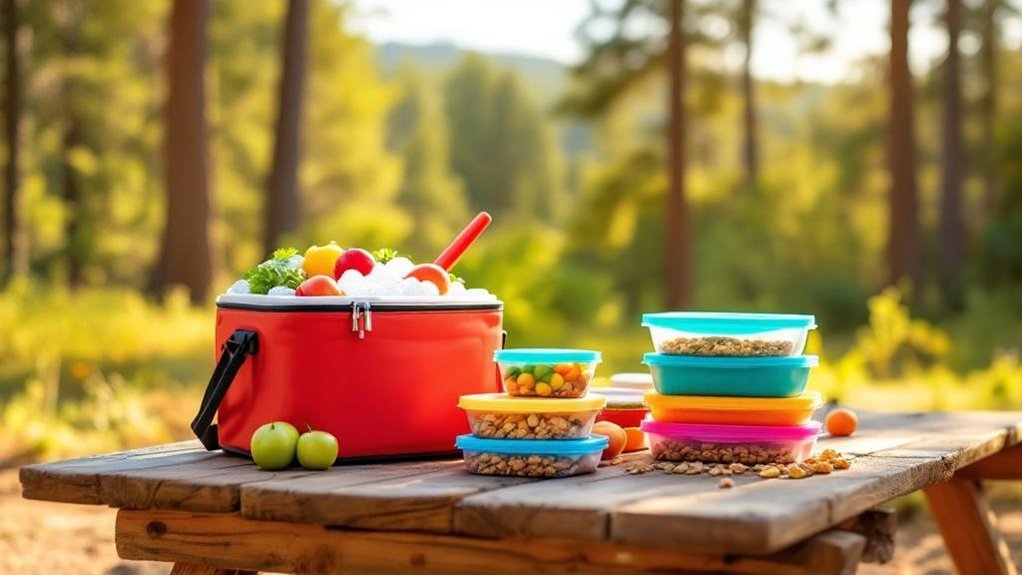
When you’re gearing up for a camping trip, selecting the right food storage containers can make all the difference in keeping your meals fresh and safe. Start by choosing durable, lightweight containers that can withstand the rigors of travel. Opt for airtight options to prevent moisture and pests from ruining your food. Consider stackable designs to maximize space in your gear. If you’re packing liquids, leak-proof containers are a must. For fresh produce, breathable bags can help maintain freshness while allowing air circulation. Don’t forget to label your containers; it’ll save you time rummaging through your supplies. Finally, think about the types of meals you’ll prepare and select containers that suit your cooking style. With these tips, you’ll be well-prepared for your adventure!
Essential Packing Techniques for Keeping Food Fresh
Packing your food properly is just as important as choosing the right containers. Start by pre-chilling your cooler; a cold cooler keeps food fresh longer. Use ice packs or frozen water bottles to maintain low temperatures. When packing, place perishable items at the bottom and less perishable items on top to minimize temperature fluctuations.
Wrap food tightly in plastic wrap or aluminum foil to prevent air exposure. Use resealable bags for snacks to save space and keep them fresh. Consider packing items in smaller portions to reduce waste and make serving easier. Finally, label everything clearly; it’ll save you time searching for meals, ensuring you enjoy your trip without worrying about food spoilage.
Smart Food Storage Practices to Minimize Waste

To minimize waste while traveling or camping, it’s important to plan your meals and storage methods carefully. Start by creating a meal plan with specific recipes, so you know exactly what ingredients you’ll need. Use reusable containers that are airtight to keep food fresh longer and prevent spoilage. Portion out snacks and meals in advance to avoid overeating and leftovers. Consider dehydrating fruits and vegetables, which can save space and reduce waste. Bring a trash bag for packaging waste and remember to dispose of it responsibly. If you have leftovers, try to consume them within a day or two. By following these smart practices, you’ll not only reduce waste but also make your travel experience more enjoyable.
Frequently Asked Questions
Can I Freeze Meals Before a Camping Trip?
Yes, you can freeze meals before a camping trip. Just make sure to use airtight containers, label them, and allow enough time for them to thaw safely. This way, you’ll enjoy fresh meals outdoors!
What Types of Food Are Best for Traveling?
You’ll want to pack non-perishable foods like nuts, jerky, granola bars, and dried fruits. Fresh fruits and vegetables are great too. Just make sure they’re sturdy enough to withstand your travels without spoiling.
How Do I Prevent Food Odors in Storage?
Seal your food tight, like wrapping a secret in velvet. Use airtight containers and sprinkle baking soda inside to absorb unwanted smells. Keep strong-scented items separate, and your storage won’t turn into a fragrant fiasco.
Are There Eco-Friendly Food Storage Options?
Yes, you’ve got eco-friendly options! Use reusable silicone bags, glass containers, or beeswax wraps. These materials reduce waste while keeping your food fresh. Always choose biodegradable or compostable products whenever possible to minimize environmental impact.
How Should I Store Leftovers While Camping?
You’ll want to tuck those leftovers away snugly. Use airtight containers or resealable bags, and keep them cool in your cooler. It’ll keep your tasty treasures fresh and ready for your next meal adventure!
At a Glance
By applying these smart food storage tips, you can enjoy fresh meals on your adventures while minimizing waste. For instance, imagine packing pre-chopped veggies in reusable silicone bags for a camping trip—this not only saves space but also keeps your ingredients fresh. With the right containers and techniques, you’ll be set for delicious, hassle-free meals, whether you’re hiking in the mountains or relaxing by the campsite. Embrace these practices, and make your next trip a culinary success!