
Caring for your kitchen knives is essential for both safety and efficiency. Always wash them by hand with mild soap and dry them immediately to prevent rust. Regularly sharpen your knives at a 20-degree angle to keep them effective, and use a honing rod after sharpening to align the blade. Store your knives safely in a block or on a magnetic strip, avoiding drawers. If your knife shows significant damage, it might be time for a replacement. There’s more to learn about proper knife care!
What Happens When You Neglect Knife Care?
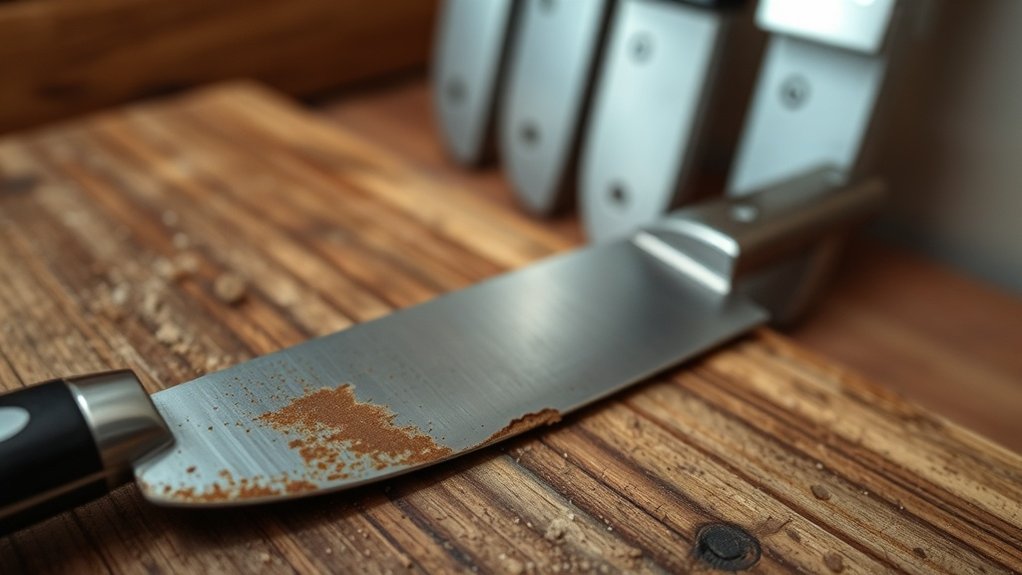
When you neglect knife care, you’re setting yourself up for a range of problems that can hinder your cooking experience. Dull knives make chopping and slicing a chore, increasing your prep time and risking accidental injuries. You might find yourself applying excessive force, which can lead to slips and cuts. Additionally, a poorly maintained knife can harbor bacteria, compromising food safety. Rust and corrosion can develop if you don’t clean and dry your knives properly, leading to costly replacements. Your cooking precision suffers as well, with uneven cuts affecting both presentation and cooking times. Ultimately, neglecting your knives can diminish your enjoyment in the kitchen, making tasks feel tedious instead of enjoyable. Prioritize knife care to guarantee a smoother cooking experience.
How to Clean Your Kitchen Knives Effectively
Neglecting knife care can lead to dull blades and unsafe cooking, but cleaning your kitchen knives properly can greatly enhance their performance and longevity. Start by rinsing your knife under warm water to remove food particles. Use a sponge or soft cloth with mild dish soap to gently scrub the blade and handle. Avoid using abrasive materials, as they can scratch the surface. After washing, rinse the knife thoroughly and dry it immediately with a soft towel to prevent rust. Storing your knives properly, such as in a knife block or magnetic strip, also helps keep them clean. Remember, never put your kitchen knives in the dishwasher, as the heat and movement can damage both the blades and handles.
Best Practices for Sharpening Your Knives
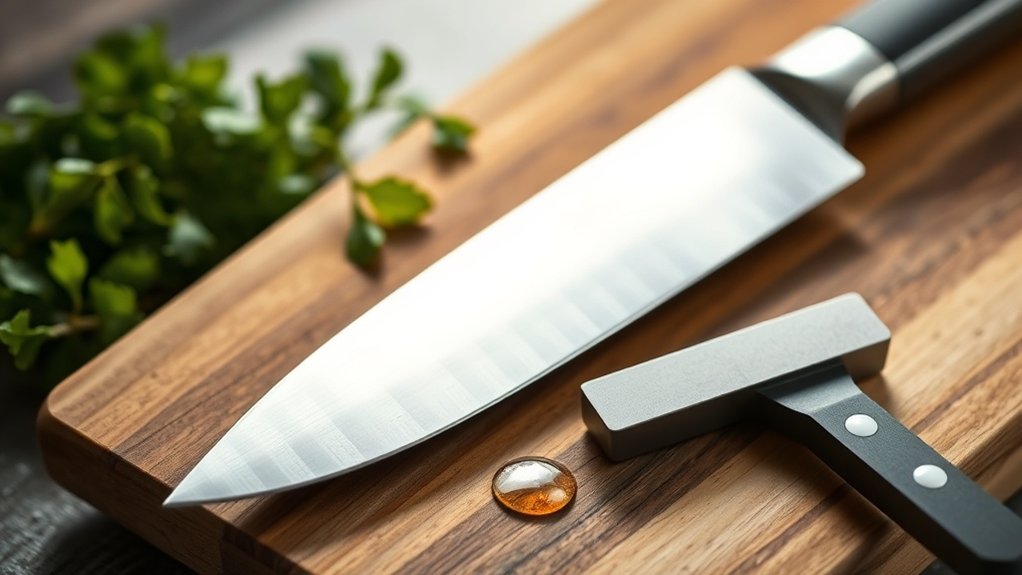
Sharpening your kitchen knives is essential for maintaining their performance and safety, and there are three best practices to keep in mind. First, always use the right sharpening tool for your knives, whether it’s a whetstone, honing rod, or electric sharpener. Each method has its unique benefits, so choose the one that suits your skill level. Second, maintain the correct angle while sharpening—typically around 20 degrees for Western knives. This helps create a sharp edge without damaging the blade. Finally, finish with a honing rod to realign the blade edge and enhance sharpness. By following these practices, you’ll keep your knives in top shape, making your cooking experience safer and more enjoyable.
How Often Should You Sharpen Your Knives?
Keeping your knives sharp is only part of the equation; knowing how often to sharpen them is equally important. The frequency depends on your usage. If you cook daily, you might need to sharpen your knives every few weeks. For occasional cooks, sharpening every couple of months should suffice. Always pay attention to how the knife feels while cutting—if it’s dragging or requires extra force, it’s time for sharpening. You can also use a honing steel regularly to maintain the edge between sharpenings. Remember, a well-maintained knife not only performs better but also enhances safety in the kitchen. Ultimately, trust your instincts and don’t hesitate to sharpen when necessary; a sharp knife is a safe knife.
Caring for Various Knife Materials: A Guide
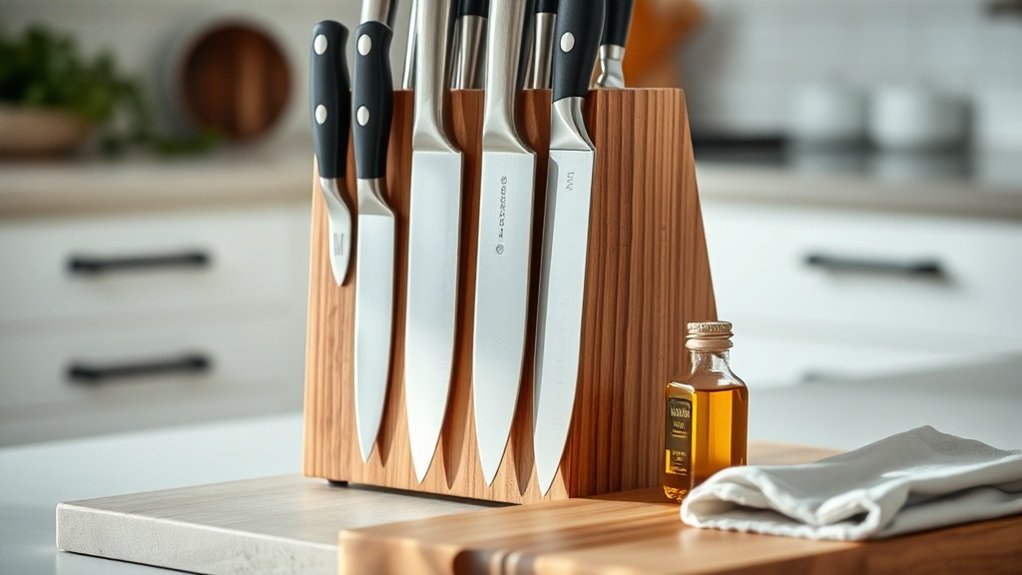
While each knife material has its unique qualities, understanding how to care for them guarantees their longevity and performance. For stainless steel knives, hand wash them with mild soap and dry immediately to prevent spotting. Carbon steel knives, while sharp and durable, require a bit more attention; always dry them promptly after use to avoid discoloration. If you own ceramic knives, keep them away from hard surfaces to prevent chipping and use only plastic or wooden cutting boards. Finally, for high-carbon stainless steel knives, follow the same care as stainless steel, but be mindful of their edge retention. By following these tips, you’ll ensure each knife maintains its performance and stays in excellent condition for years to come.
Preventing Knife Rust
To keep your kitchen knives in top shape, preventing rust is a key factor. First, always dry your knives immediately after washing. Water left on the blade can lead to rust formation. Store your knives in a dry place, preferably in a knife block or on a magnetic strip, to avoid moisture buildup. Avoid soaking your knives in water, as this can also contribute to rust. If you notice any rust spots, gently scrub them away with a fine steel wool pad or a rust eraser. Finally, consider applying a light coat of food-safe mineral oil on the blade to create a protective barrier against moisture. By following these steps, you’ll prolong the life and performance of your kitchen knives.
Avoiding Common Knife Damage

Since kitchen knives are an essential tool for any cook, it’s crucial to handle them with care to avoid common damage. First, always use a proper cutting board; avoid glass, stone, or metal surfaces that can dull your blade. Keep your knives away from heavy items that could cause nicks or chips when stacked. When cleaning, never toss them in the dishwasher; hand wash with mild soap and dry immediately. Don’t use your knife for tasks like prying or opening cans, as this can bend or break the blade. Finally, be mindful of your grip; a slip can lead to accidents or damage your knife. By following these tips, you’ll help maintain your knives’ edge and longevity.
How to Store Your Knives Safely
Proper knife care continues even after use, especially when it comes to storage. To keep your knives in top shape, choose a suitable method that protects their blades. A magnetic strip is a great option; it keeps knives visible and accessible while preventing blade contact. If you prefer a knife block, make sure it has slots that fit your knives snugly. Avoid tossing them into drawers, as this can lead to dull edges and injuries. Instead, consider using blade guards or sheaths to cover the blades if you must store them in a drawer. Whatever method you choose, remember to keep the knives dry and clean to prevent rust and maintain their longevity. Your knives deserve a safe and organized home!
When Should You Replace Your Kitchen Knives?

When should you consider replacing your kitchen knives? If your blades have developed significant chips or cracks, it’s time for a change. Dull knives that can’t be sharpened effectively also signal that you need new ones. Pay attention to the handle, too; if it’s loose, cracked, or uncomfortable, it can affect your cooking experience and safety. Additionally, if your knives have rusted or corroded beyond repair, it’s best to invest in replacements. Ultimately, if you find yourself frequently reaching for a different knife because yours just isn’t cutting it—literally—it’s a clear sign you need an upgrade. Trust your instincts; quality knives make cooking more enjoyable and efficient. Don’t hesitate to replace them when necessary.
Essential Tools for Knife Maintenance
To keep your kitchen knives in top shape, you’ll need a few essential tools that make maintenance straightforward. First, invest in a quality honing steel; it’ll help realign the blade edges between sharpenings. Next, grab a sharpening stone or a pull-through sharpener for when your knives start to lose their edge. A cutting board made of wood or plastic is vital, too—avoid glass or ceramic, which can dull your knives faster. Don’t forget a cloth or towel for drying your knives after washing; moisture can cause rust. Finally, a magnetic strip or knife block will keep your knives organized and protected. With these tools, you’ll guarantee your knives stay sharp and ready for any culinary task!
Frequently Asked Questions
Can I Use a Dishwasher to Clean My Kitchen Knives?
No, you shouldn’t use a dishwasher to clean your kitchen knives. The high heat and harsh detergents can damage the blades and handles. Instead, wash them by hand with warm soapy water for better care.
What Is the Best Way to Dry My Knives After Washing?
After washing, it’s best to hand-dry your knives with a soft cloth. Isn’t it essential to keep them in top shape? This prevents rust and maintains their sharpness, ensuring they’re ready for your next culinary adventure.
How Do I Know if My Knife Is Dull?
You’ll know your knife is dull if it struggles to slice through food, requires excessive pressure, or leaves ragged edges. Testing it on a tomato or paper can help you assess its sharpness effectively.
Is It Safe to Use a Knife With a Chipped Blade?
Using a knife with a chipped blade isn’t safe. Imagine slicing bread; the chip could snag and cause a serious cut. Always inspect your knife before use—if you see a chip, it’s time to repair or replace!
Can Different Types of Knives Share the Same Sharpening Tool?
Yes, different types of knives can share the same sharpening tool, but you should verify the tool suits each knife’s design. Always follow the manufacturer’s recommendations to maintain ideal sharpness and avoid damaging your blades.
At a Glance
Caring for your kitchen knives isn’t just about maintenance; it’s about preserving the tools that elevate your cooking. By cleaning them properly, sharpening them regularly, and storing them safely, you guarantee they perform at their best. Avoiding neglect keeps them sharp and ready, while understanding their materials helps you treat them right. So, embrace these essential tips, and watch your culinary skills shine as brightly as your well-cared-for knives. After all, a great knife makes a great chef!