Organizing your food storage containers matters because it boosts kitchen efficiency and enhances your cooking experience. When containers are sorted and easy to access, you’ll save time and reduce frustration while preparing meals. Plus, a clutter-free space lowers stress and helps you maintain a smoother cooking flow. By taking just a bit of time to arrange them well, you can transform your kitchen. Discover more tips on creating an organized and efficient kitchen setup!
Practical Tips for Organizing Your Food Storage Containers
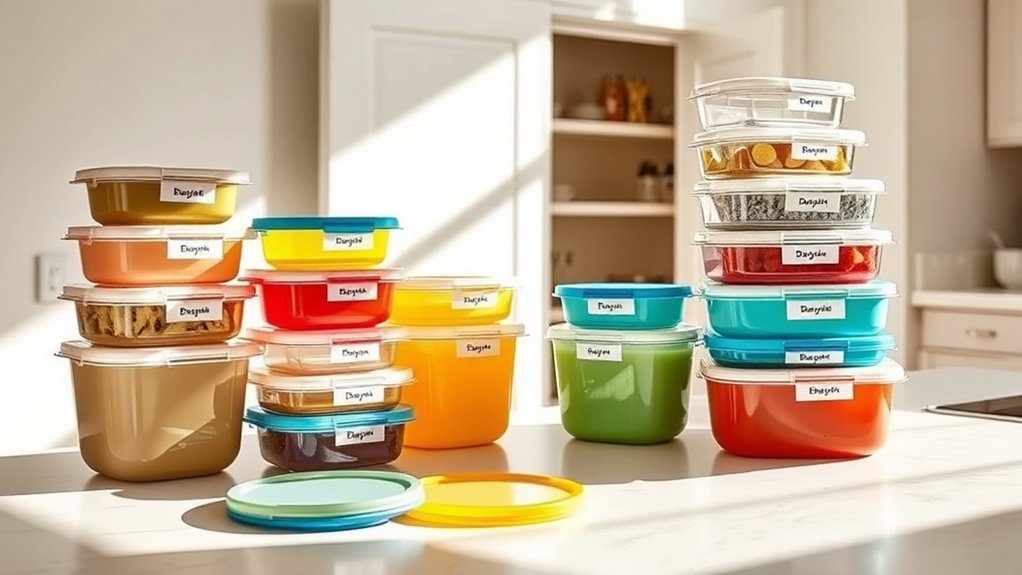
Organizing your food storage containers can transform your kitchen chaos into a streamlined space. Start by sorting through your containers, discarding any that are damaged or missing lids. Group similar sizes together to maximize space and make it easier to find what you need. Use clear bins or drawer dividers to keep smaller containers organized and accessible. Label each container with its contents and size to save time when searching for the right one. Stack containers and lids vertically or nest them to save space in your cabinets. Finally, keep your most-used containers within easy reach, ensuring you can quickly grab them when you’re cooking or packing lunches. With these practical tips, your kitchen will feel more efficient and less cluttered.
Understanding the Impact of Clutter on Kitchen Efficiency
Even if you love cooking, clutter can quickly turn your kitchen into a frustrating space. When your food storage containers are scattered and disorganized, finding the right lid or container can feel like a scavenger hunt. This inefficiency not only wastes time but can also disrupt your cooking flow, making it harder to enjoy the process. You might find yourself feeling overwhelmed, leading to rushed meals or even takeout instead of a homemade dish. A cluttered kitchen can also increase stress, affecting your overall cooking experience. By understanding how clutter impacts your kitchen efficiency, you can recognize the importance of organizing your food storage containers, allowing you to create a more functional and enjoyable cooking environment.
How to Categorize Your Food Storage Containers
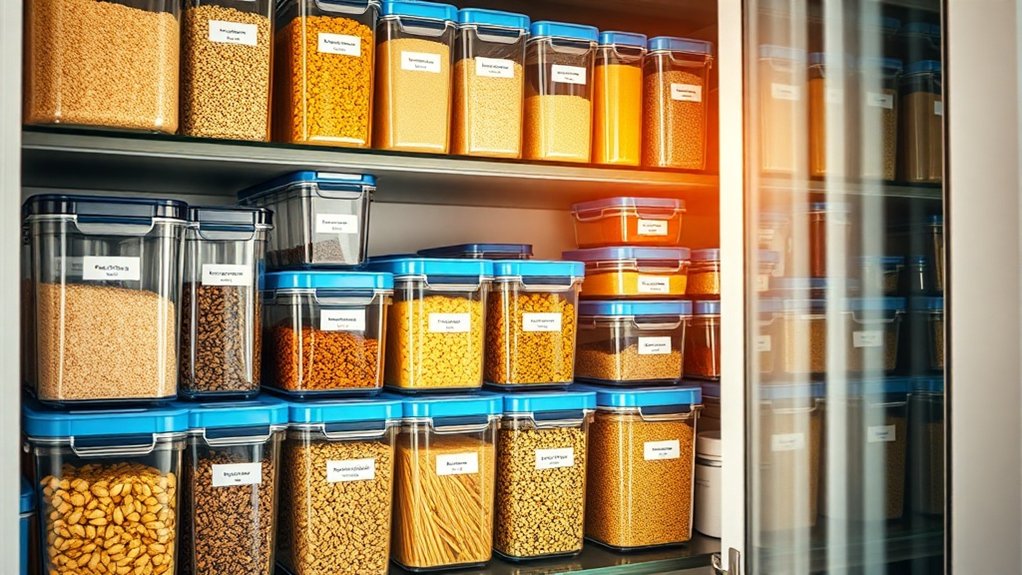
A well-structured system can make all the difference when it comes to categorizing your food storage containers. Start by sorting them into groups based on size and shape. You might want to create categories like small, medium, and large containers or group them by type, such as bowls, jars, and bags. Next, consider how you’ll use them. Keep containers you use daily within easy reach, while seldom-used ones can go higher up or in the back. Label each category for quick identification, and guarantee lids are stored with their corresponding containers. Finally, regularly assess your collection—if you find duplicates or rarely used items, it might be time to declutter. This approach streamlines your kitchen and saves you time when cooking.
Use Clear Containers for Better Visibility
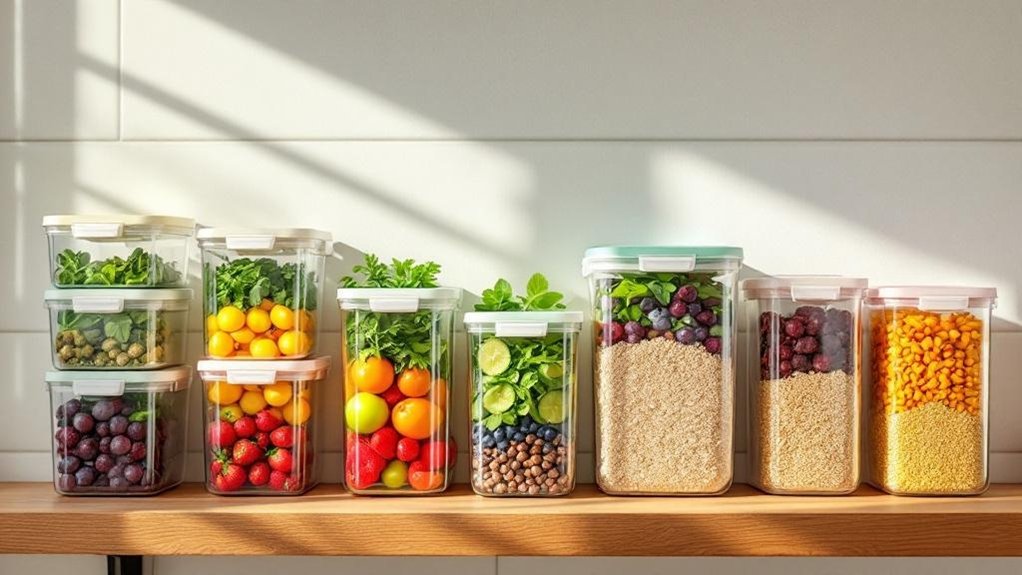
When you use clear containers, you’ll instantly boost visibility and make it easier to find what you need. No more rummaging through cabinets or drawers, wasting time searching for that elusive lid or jar. With transparent containers, you can quickly spot your ingredients, whether it’s pasta, rice, or snacks. This not only saves you time but also helps you keep track of what you have on hand, reducing food waste. Plus, clear containers create a clean, organized look in your kitchen, making it feel more inviting. You’ll appreciate the aesthetic and functional benefits of knowing exactly what’s inside each container at a glance. Choose clear containers to streamline your cooking process and enhance your kitchen organization.
Smart Storage Ideas for Small Kitchens
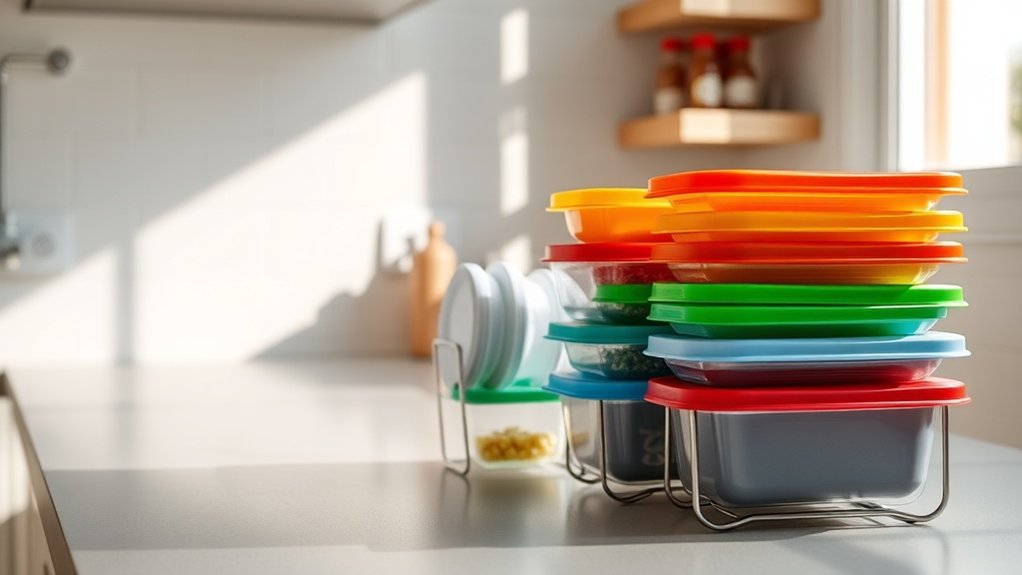
Clear containers not only enhance visibility but also play a key role in maximizing storage in small kitchens. To make the most of your space, consider using vertical shelving to stack containers. This keeps them accessible while freeing up counter space. Use drawer dividers to organize smaller containers, ensuring you can easily find what you need. Magnetic strips can hold lids or small containers on the wall, keeping them out of the way yet within reach. Don’t forget about utilizing the insides of cabinet doors for additional storage; small hooks can hold measuring spoons or utensils. By implementing these smart storage ideas, you’ll create a more functional kitchen without sacrificing style.
Choosing Food Storage Containers: Material Considerations for Freshness and Safety
Choosing the right material for your food storage containers is essential for maintaining freshness and safety. When selecting containers, consider glass, plastic, and stainless steel. Glass is non-reactive, easy to clean, and keeps food fresh, but it can break easily. Plastic is lightweight and versatile but check for BPA-free options to avoid harmful chemicals. Stainless steel is durable and excellent for keeping food cold, but it’s not microwave-safe. Each material has its pros and cons, so think about your needs and usage. Pay attention to airtight seals, as they help prevent spoilage and contamination. Ultimately, the right material can enhance your food storage experience and keep your meals safe and flavorful.
Keep Your Food Storage Organized and Efficient
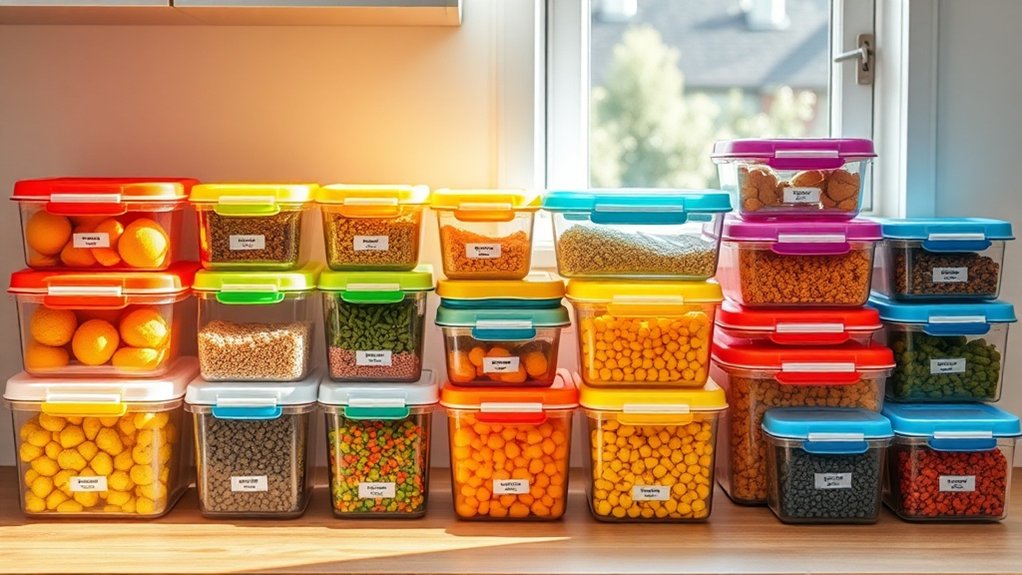
To keep your food storage organized and efficient, start by categorizing containers based on their purpose. Group items like grains, leftovers, and snacks together. This way, you’ll find what you need quickly. Use clear, labeled containers so you can easily identify contents at a glance. Regularly check your inventory to avoid expired items and maintain freshness. Stackable containers can save space and create a more streamlined look. Additionally, consider using drawer organizers or bins to separate different types of food storage. Don’t forget to store lids with their corresponding containers to prevent frustrating searches. By implementing these simple strategies, you’ll enhance not only your kitchen’s organization but also your cooking efficiency. Happy organizing!
Eco-Friendly Food Storage Container Options
While traditional plastic containers are convenient, opting for eco-friendly food storage options not only benefits the environment but also enhances your kitchen’s sustainability. You can make a positive impact by choosing materials that are safe and reusable. Here are some excellent eco-friendly alternatives:
- Glass Containers: Durable and free from harmful chemicals, glass is perfect for storing leftovers.
- Stainless Steel: Lightweight and rust-resistant, stainless steel containers are ideal for both food storage and on-the-go meals.
- Bamboo Containers: Biodegradable and stylish, bamboo options are great for those seeking a natural touch.
- Silicone Bags: Reusable and flexible, silicone bags can replace single-use plastic bags, making them a practical choice.
Switching to these eco-friendly options will help you create a greener kitchen while keeping your food fresh!
How Do Organized Containers Save You Time and Money?
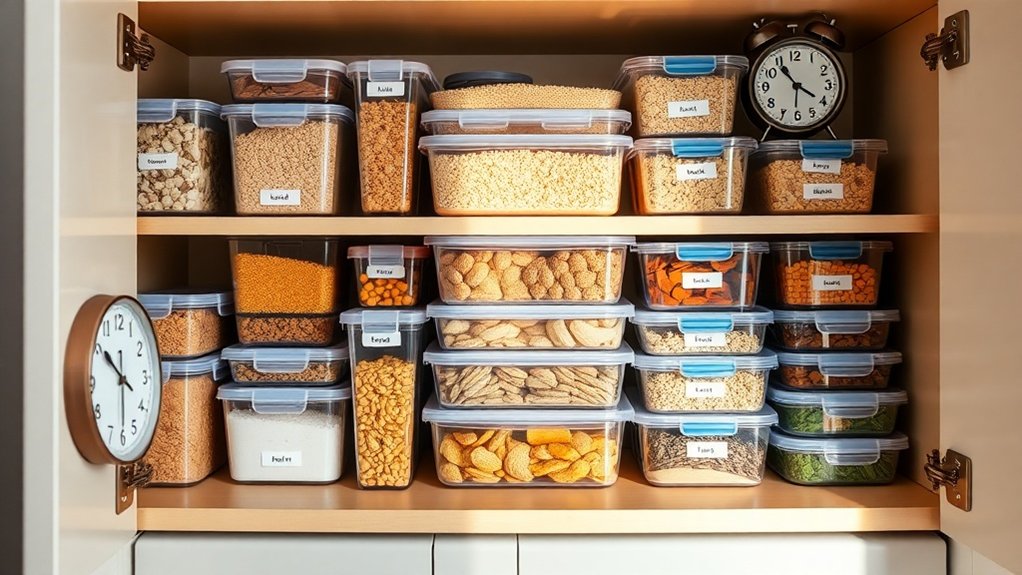
Organized food storage containers can greatly streamline your kitchen routine, saving you both time and money. When everything has a designated spot, you’ll spend less time searching for that elusive lid or container. This efficiency means you can quickly prepare meals, reducing the temptation to order takeout.
Additionally, when your containers are sorted and labeled, you’re less likely to waste food. You’ll easily spot items nearing expiration, allowing you to use them before they spoil. This not only cuts down on waste but also helps you stick to your grocery budget by preventing overbuying. Ultimately, a well-organized kitchen enhances your cooking experience, making it easier and more enjoyable while keeping costs in check.
Frequently Asked Questions
What Types of Food Storage Containers Are Best for Freezing?
For freezing, use airtight containers like glass, BPA-free plastic, or silicone bags. Make sure they’re labeled and stackable, so you maximize space and easily identify contents. Avoid overfilling to allow for expansion during freezing.
How Often Should I Replace My Food Storage Containers?
You should replace your food storage containers every couple of years, or sooner if they’re cracked or stained. These containers can become a breeding ground for bacteria, so keep your kitchen safe and fresh!
Can I Use Regular Jars for Food Storage?
Yes, you can use regular jars for food storage. Just make certain they’re clean and airtight to keep food fresh. Opt for glass jars when possible, as they’re durable and won’t absorb odors or stains.
What Are the Signs of Damaged Food Storage Containers?
You’ll notice signs like cracks, warping, or discoloration in your food storage containers. If they smell off or don’t seal properly, it’s time to replace them. Damaged containers can compromise your food’s safety and freshness.
How Do I Clean and Maintain My Food Storage Containers?
To clean and maintain your food storage containers, wash them with warm soapy water, avoid harsh chemicals, and dry them thoroughly. Regularly check for cracks or stains to guarantee they’re safe for use.
At a Glance
By organizing your food storage containers, you’re not just decluttering; you’re enhancing your kitchen’s efficiency. When everything’s in its place, you save time searching and reduce waste, ultimately saving money. Plus, using clear containers helps you quickly spot what you need, keeping your meals fresh and your cooking stress-free. Embrace these simple strategies, and you’ll discover that a little organization goes a long way in creating a more enjoyable and efficient cooking experience.