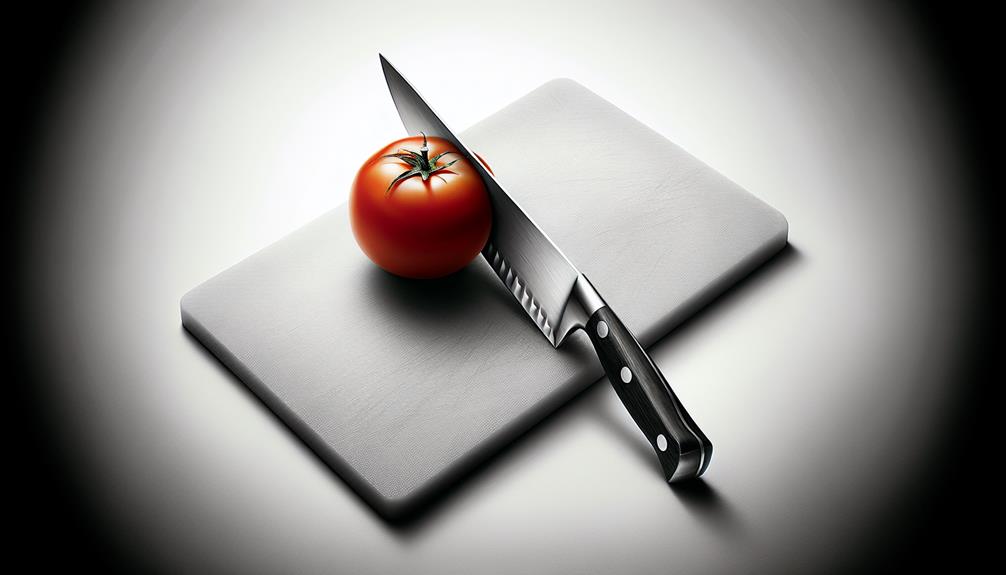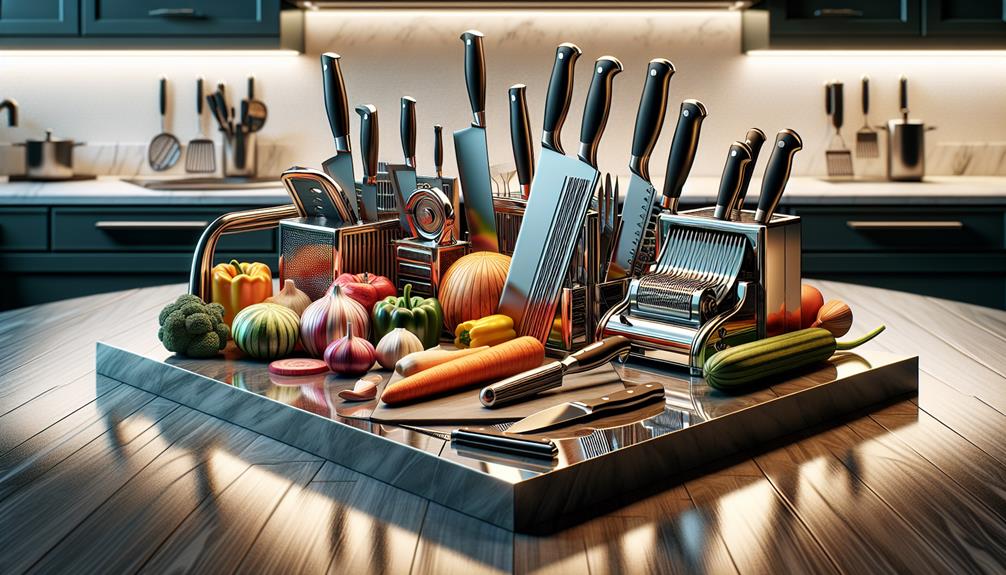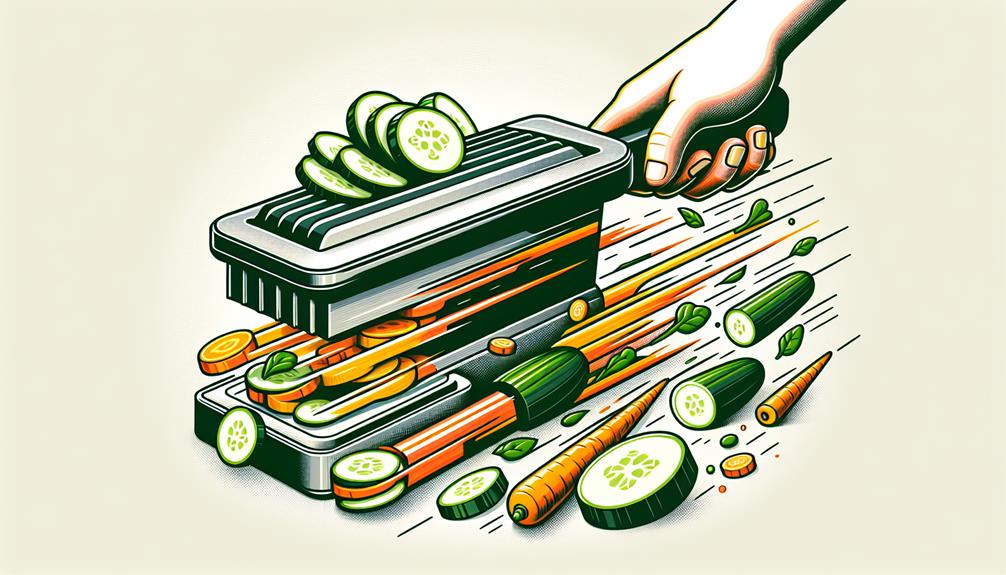

To stay safe while using kitchen knives, always use a sharp blade and cut on a stable surface. Keep your fingers curled inward and always cut away from your body. Pass knives by offering the handle with the blade facing down, and store them in a block or on a magnetic strip. Remember to maintain your knives regularly and wash them right after use. There’s even more important information you should know to enhance your knife skills.
Essential Knife Safety Tips for Home Chefs
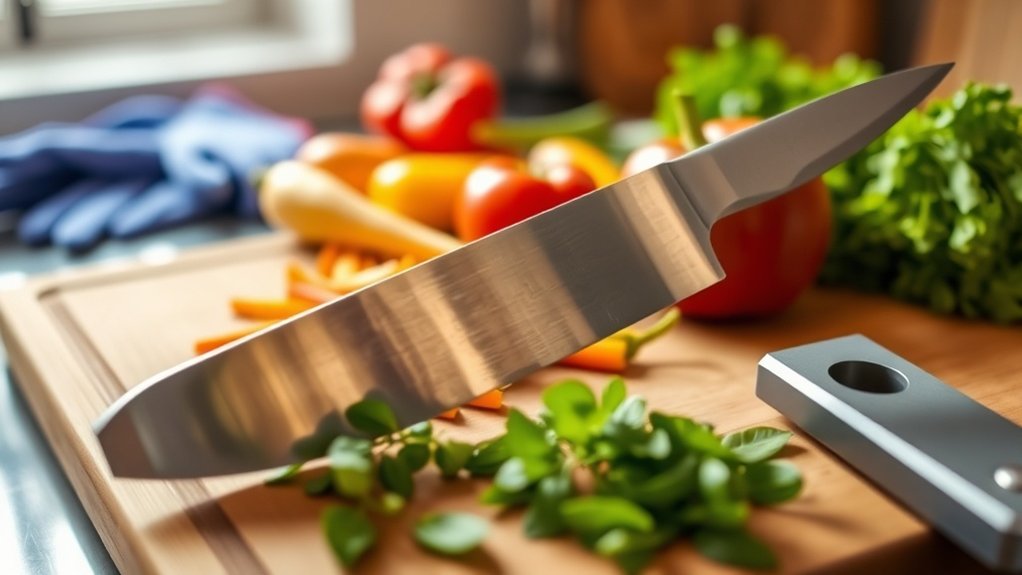
When you’re in the kitchen, mastering knife safety is essential to prevent accidents and injuries. First, always use a sharp knife; dull blades require more force and can slip easily. Make sure to keep your cutting board stable, using a damp cloth underneath if needed. Always cut away from your body, and keep your fingers curled inward, using the claw grip to protect them. When passing a knife, offer the handle to the other person, ensuring the blade is facing down. Store knives in a designated block or magnetic strip, never haphazardly in a drawer. Finally, clean your knives carefully, avoiding soaking them in water where they can’t be seen. By following these tips, you’ll greatly reduce the risk of injury in your kitchen.
Understand the Importance of Knife Safety
Safety is paramount in any kitchen, and understanding the importance of knife safety can greatly reduce the risk of accidents. Knives are essential tools, but they can be dangerous if mishandled. By recognizing the potential hazards, you can take proactive steps to protect yourself and others. Always be aware of your surroundings when using a knife, and maintain a firm grip while cutting. Proper knife techniques not only guarantee your safety but also improve your efficiency in the kitchen. Remember, a well-maintained knife is less likely to slip, making it safer to use. Educating yourself about the risks and best practices will empower you to handle knives confidently and safely, creating a more enjoyable cooking experience.
Choose the Right Knife for the Task
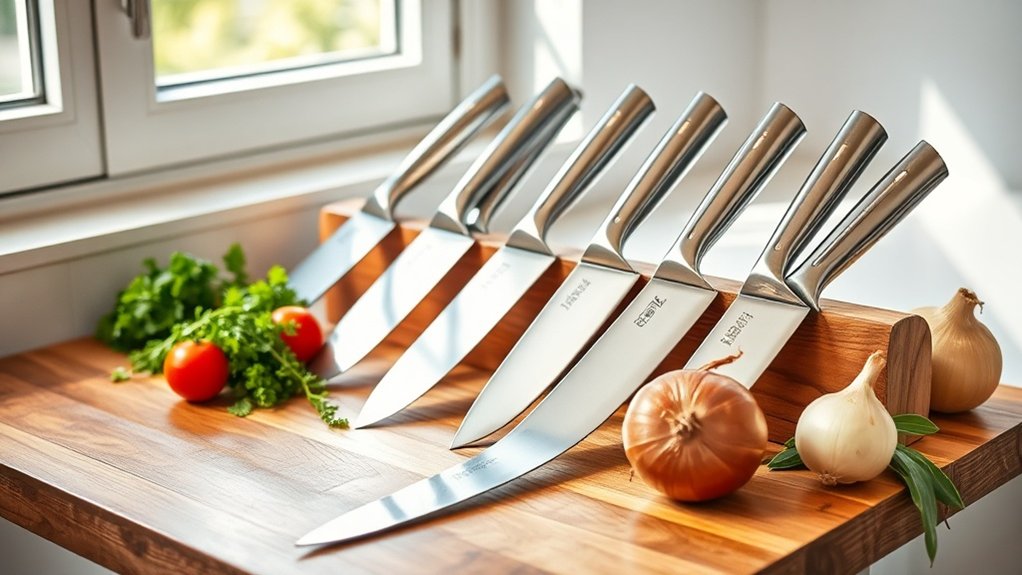
Using the right knife for the task can make all the difference in your cooking experience. Each knife serves a specific purpose, so knowing which one to choose is crucial. For slicing bread, a serrated knife is perfect, as it easily cuts through crusts without squashing the soft interior. When chopping vegetables, a chef’s knife offers versatility and control, allowing you to tackle various sizes and shapes. If you’re working with delicate herbs, a paring knife gives you precision without damaging the leaves. Avoid using a single knife for every job; it can lead to accidents and inefficiency. By selecting the appropriate knife, you’ll not only enhance your cooking but also guarantee a safer kitchen environment.
How to Keep Your Knives Sharp and Safe
Keeping your knives sharp is vital not only for effective cutting but also for maintaining safety in the kitchen. Dull knives require more force, increasing the risk of slips and accidents. To keep your blades in prime shape, invest in a good-quality whetstone or honing rod. Regularly honing your knives can help maintain their edge, while periodic sharpening will keep them performing at their best.
Make it a habit to sharpen your knives every few months, depending on usage. Always clean your knives after use and store them safely in a knife block or magnetic strip to prevent damage. Remember, a sharp knife is a safe knife, so don’t neglect this important aspect of your kitchen tools!
Proper Knife Handling Techniques and Care
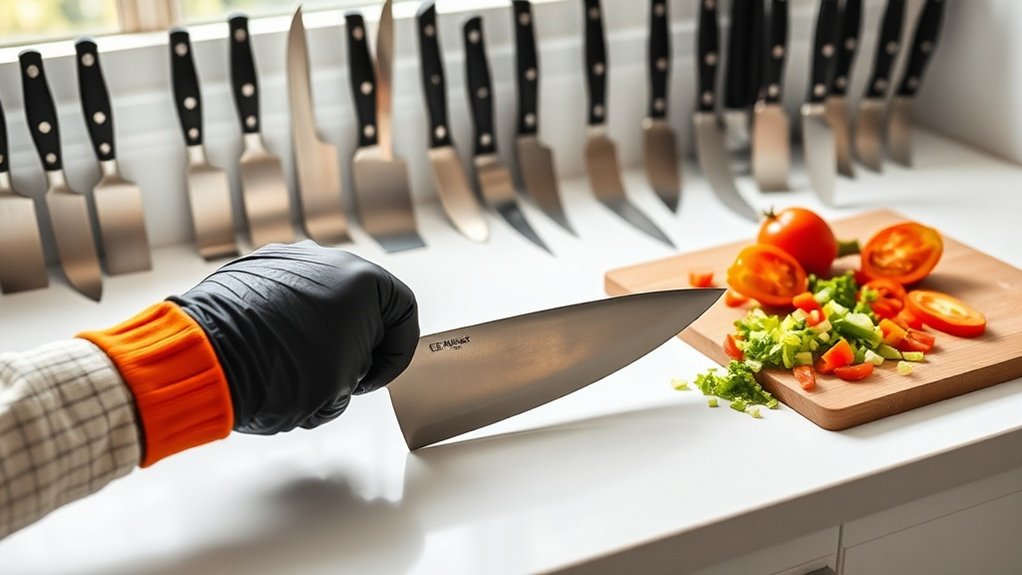
Mastering proper knife handling techniques is essential for a safe and efficient kitchen experience. Always grip your knife firmly with your dominant hand, keeping your fingers curled under to avoid accidents. Use your other hand to guide the food, ensuring your fingertips are tucked away from the blade. When slicing, maintain a steady rhythm to enhance control and precision. Always cut away from your body, and never try to catch a falling knife—let it drop. After use, clean your knife immediately to prevent rust and maintain hygiene. Store it safely in a knife block or magnetic strip, keeping the blade protected. By following these techniques, you’ll enhance your safety and improve your culinary skills.
Always Cut on a Stable Surface
A stable surface is essential for safe knife work in the kitchen. When you cut on a sturdy cutting board, you reduce the risk of slips and accidents. Always make sure your board is clean and free from moisture; a wet surface can be dangerously slippery. If your cutting board tends to move around, place a damp cloth or paper towel underneath it for extra grip. Avoid cutting on unstable surfaces like countertops or plates, as they won’t provide the support you need. Remember, a solid base allows for better control of your knife, which not only keeps you safe but also improves your precision. Prioritize stability, and you’ll enhance both your safety and your cooking experience.
Why Stable Surfaces Are Key to Knife Safety
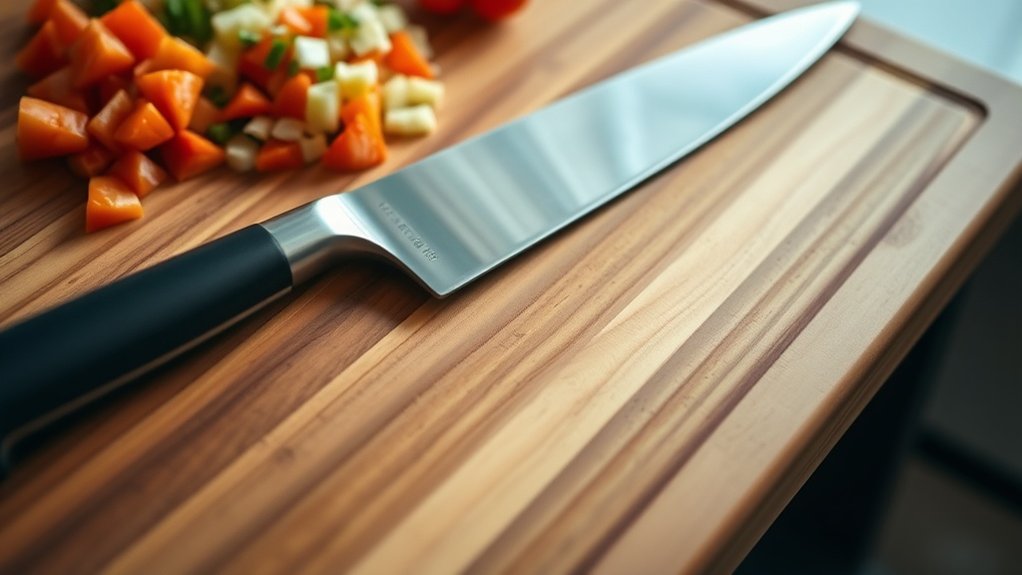
Stable surfaces are essential for knife safety because they provide the necessary support and control while cutting. When you work on a stable surface, you reduce the risk of slips and accidents, allowing for more precise cuts. Here are a few reasons why stability matters:
- Prevents Slipping: A stable surface keeps your cutting board in place, minimizing the chances of your knife slipping away from the intended target.
- Enhances Control: When your board is stable, you can apply the right amount of pressure, leading to safer and more efficient cutting.
- Increases Focus: A steady workspace allows you to concentrate on your task without worrying about the surface moving or shifting unexpectedly.
When to Consult a Knife Safety Expert?
When should you seek advice from a knife safety expert? If you’re new to cooking or feel unsure about your knife skills, it’s smart to consult an expert. They can provide personalized tips to improve your technique and boost your confidence. If you’ve experienced any accidents or near misses while using knives, don’t hesitate to reach out; understanding what went wrong can prevent future injuries. Also, if you’re considering purchasing high-end knives or specialized tools, an expert can guide you on the best choices for your needs. Finally, if you’re training others, whether friends or family, getting professional insights guarantees everyone learns safe practices from the start. Prioritize safety and seek expert advice when needed!
Safe Storage Techniques for Knives
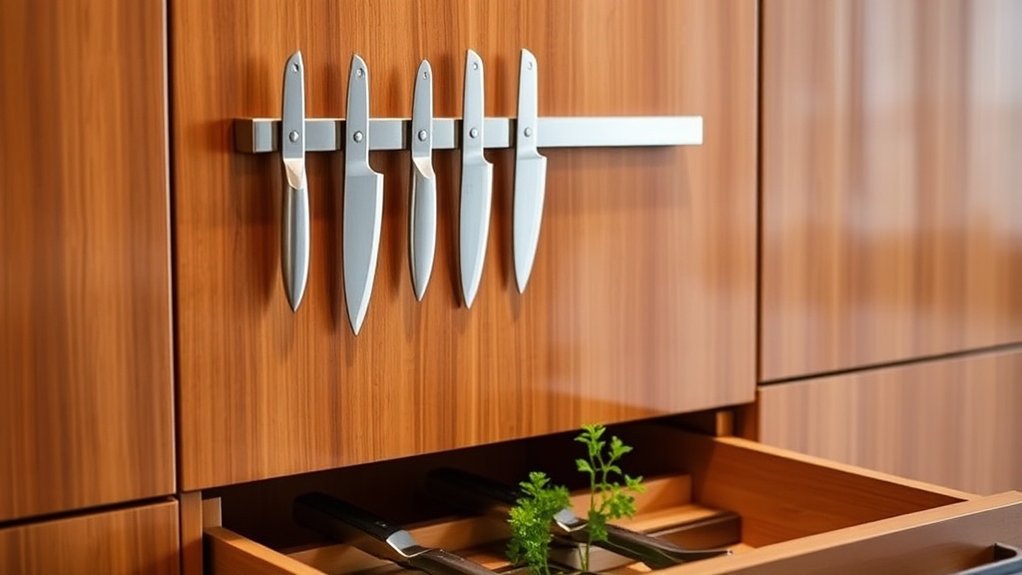
To keep your kitchen safe and organized, proper knife storage is essential. Using the right techniques not only protects your knives but also reduces the risk of accidents. Here are a few effective storage methods you should consider:
- Magnetic Strips: Mount a magnetic strip on the wall for easy access and visibility. This keeps your knives secure and out of drawers.
- Knife Blocks: Invest in a sturdy knife block that fits your knife set. It prevents blades from dulling and keeps them safely stored.
- Drawer Inserts: Use drawer inserts to keep knives separated and organized. This minimizes the risk of accidental cuts when reaching for other utensils.
Frequently Asked Questions
What Should I Do if I Cut Myself While Using a Knife?
If you cut yourself while using a knife, immediately rinse the wound under cool water, apply pressure to stop the bleeding, and cover it with a clean bandage. Seek medical attention if it’s serious.
Can Children Safely Use Kitchen Knives With Supervision?
Yes, children can safely use kitchen knives with supervision. Picture them carefully slicing soft fruits, their tiny hands steady and focused. You’re guiding them, ensuring they learn the skills while staying safe and confident in the kitchen.
How Often Should I Replace My Kitchen Knives?
You should replace your kitchen knives every 3 to 5 years, or sooner if they’re dull, chipped, or uncomfortable to use. Regular maintenance can extend their life, but eventually, they’ll need replacing for peak performance.
Are Ceramic Knives Safer Than Metal Ones?
Ceramic knives aren’t inherently safer than metal ones; they can chip or break easily. However, their lightweight design and sharp edges can help you slice with precision, making your cooking experience smoother and more enjoyable.
What Are the Signs of a Dull Knife?
A dull knife struggles to cut through food, requiring extra pressure. You’ll notice uneven slices, and it might slip while cutting. If you’re applying too much force, it’s definitely time to sharpen that blade!
At a Glance
By following these essential knife safety tips, you can greatly reduce your risk of injury in the kitchen. Did you know that nearly 40% of kitchen injuries involve knives? Staying aware and practicing proper techniques can help keep you safe while you whip up delicious meals. Always remember to choose the right knife, maintain its sharpness, and cut on a stable surface. With these precautions, you’ll enjoy your cooking experience without the worry of accidents.